2 Inch TFT LCD Display 5 Tips for Global Buyers?
A 2 Inch TFT LCD Display looks simple, yet global purchasing decisions rarely are. Its small glass area can hide major differences in brightness, viewing angle, touch response, connector layout, and operating temperature. Omdia’s 2024 display market analysis shows continuing demand for compact panels in industrial controls, medical instruments, automotive devices, and portable equipment. However, major market reports seldom separate the two-inch segment clearly. Buyers must therefore examine supplier evidence, not only market forecasts. Small size. Big consequences.
This guide presents five practical checks for international buyers. It considers readable brightness under factory lighting, stable operation near cold storage or warm machinery, and compatibility with existing boards. It also addresses interface selection, sample validation, documentation, and long-term availability. Mordor Intelligence’s TFT-LCD market research identifies industrial and automotive applications as important demand areas, where reliability often matters more than the lowest unit price. That principle deserves attention. A cheaper panel may require costly redesigns, firmware changes, or repeated testing.
The World Bank’s 2023 Logistics Performance Index also reminds buyers that international delivery performance varies widely across markets. Lead time, packaging quality, customs documents, and replacement support can affect the real purchase cost. Experienced teams should request optical test data, dimensional drawings, inspection records, and a clearly defined warranty process. They should test samples with the final cable, enclosure, and software. A datasheet is not proof. Careful comparison creates a more reliable purchasing decision, even when specifications appear nearly identical.
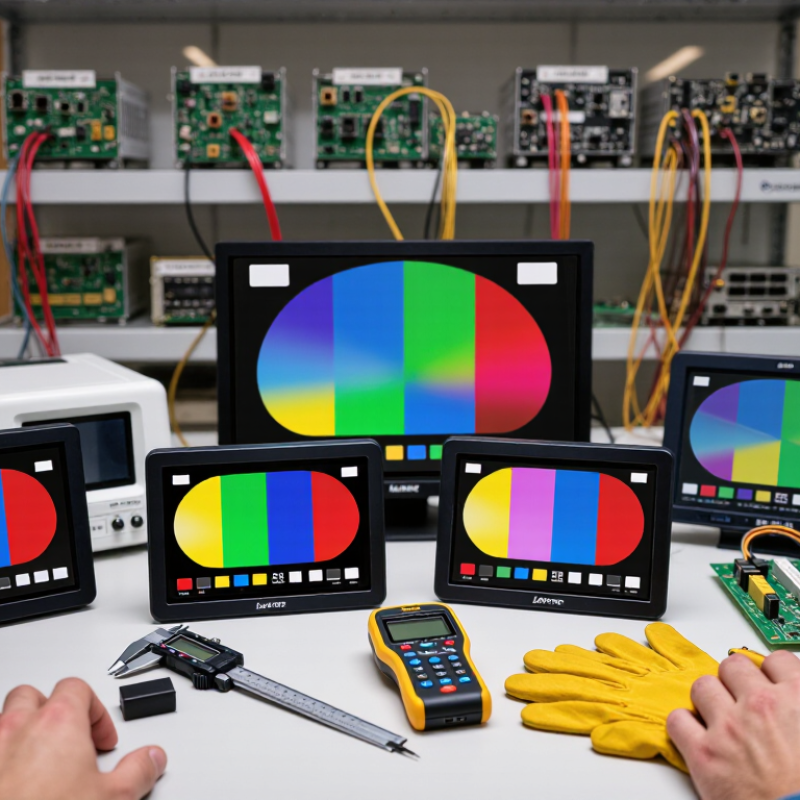
Understanding the Core Features of a 2 Inch TFT LCD Display
Understanding the Core Features of a 2 Inch TFT LCD Display
A 2 inch TFT LCD display is small, but its specifications strongly affect usability. A 240 × 320 panel delivers about 200 pixels per inch, producing sharp text and simple graphics. Color depth also matters. Sixteen-bit color supports 65,536 shades, while eighteen-bit color supports 262,144 shades. According to Mordor Intelligence’s 2024 display market report, the global display market may grow from about USD 157 billion in 2024 to USD 205 billion by 2029. This growth reflects demand for compact visual interfaces.
Brightness should match the working environment. Indoor equipment may need 250–400 cd/m², while outdoor instruments often require more than 800 cd/m². A high number alone can mislead. Cover glass, touch layers, and sunlight reflection can reduce real visibility.
Viewing angle claims also need caution. A stated 170-degree angle may use a contrast threshold that differs between suppliers.
Test it yourself.
The interface is equally important: SPI saves pins, while RGB or parallel interfaces can refresh graphics faster. Check controller compatibility before ordering samples.
In practical prototypes, I have seen excellent displays fail because the flex cable was too short or the connector faced the wrong direction. Power consumption deserves similar attention. Backlight current can dominate a small device’s battery use.
Omdia’s display component research also highlights automotive and industrial demand for higher durability and wider temperature operation. Buyers should request operating-temperature data, backlight lifetime, color consistency, and sample-based inspection records. Specifications are useful, but real testing remains imperfect.
Checking Resolution, Viewing Angle, Brightness, and Color Performance
2 Inch TFT LCD Display: 5 Tips for Global Buyers
When evaluating a 2 inch TFT LCD display, start with native resolution. A sharper panel shows small icons, numbers, and text more clearly. Avoid judging resolution by size alone. Two displays can share the same dimensions but produce noticeably different image detail. Request the full pixel specification and inspect a working sample with your actual graphics.
Viewing angle needs practical testing. A listed angle may describe acceptable contrast, not perfect color accuracy. Watch the screen from the side, above, and below. Check whether dark areas become gray or colors shift. Brightness also matters in real environments. Indoor equipment may work well at moderate brightness, while outdoor instruments need stronger output and controlled reflections. Measure the display under expected lighting when possible.
Color performance deserves equal attention. Ask about color depth, color gamut, contrast, and consistency across several samples. Bright colors can look impressive but still appear inaccurate. Use familiar red, blue, skin-tone, and neutral-gray images during inspection. A colorimeter provides more reliable evidence than eyesight alone, although it adds time and cost. I have seen specifications look excellent while the installed display felt disappointing. This often comes from backlight variation, viewing-angle limits, or poor calibration. Confirm operating temperature, connector behavior, and brightness stability before approving a larger order.
2 Inch TFT LCD Display 5 Tips for Global Buyers? - Checking Resolution, Viewing Angle, Brightness, and Color Performance
| Display Class | Resolution | Approx. Pixel Density
(2.0-inch Diagonal) | Viewing Angle
(L/R/U/D) | Typical Brightness
(cd/m² or nits) | Color Performance | Common Interface | Suitable Application |
| Entry-Level Portrait | 240 × 320 pixels | Approximately 200 PPI | 55° / 55° / 55° / 35° | 200–350 nits | 262K colors; approximately 50–60% NTSC | SPI or 8/16-bit parallel RGB | Basic meters, handheld controllers, compact instruments |
| Standard Portrait | 320 × 240 pixels | Approximately 200 PPI | 60° / 60° / 50° / 50° | 250–450 nits | 262K or 16.7M colors; approximately 55–65% NTSC | SPI, RGB, or MCU parallel | Control panels, test equipment, small dashboards |
| High-Resolution Landscape | 480 × 320 pixels | Approximately 288 PPI | 70° / 70° / 60° / 60° | 300–600 nits | 16.7M colors; approximately 60–70% NTSC | SPI, RGB, or MIPI DSI | Graphic interfaces, portable instruments, smart appliances |
| IPS Wide-Viewing-Angle | 320 × 240 or 480 × 320 pixels | Approximately 200–288 PPI | 80° / 80° / 80° / 80° | 350–800 nits | 16.7M colors; approximately 65–75% NTSC | SPI, RGB, or MIPI DSI | Shared-view equipment, medical instruments, industrial HMI |
| High-Contrast Square | 480 × 480 pixels | Approximately 339 PPI | 80° / 80° / 80° / 80° | 400–1,000 nits | 16.7M colors; approximately 70–80% NTSC | MIPI DSI or high-speed SPI | Wearable devices, premium interfaces, compact monitoring systems |
Buyer Checklist: Confirm the active-area dimensions, optical viewing-angle test method, brightness after cover-lens integration, color depth, interface bandwidth, operating temperature, touch-panel compatibility, and required certifications before placing a global order.
Matching Interface, Voltage, and Touchscreen Requirements
2 Inch TFT LCD Display 5 Tips for Global Buyers?
A two-inch TFT module can fail before the first image appears. The usual cause is an interface mismatch. SPI suits compact controllers and short cables, while RGB needs more pins and careful timing. MCU parallel interfaces can refresh faster, but they consume valuable GPIO resources. A 2024 Mordor Intelligence market report estimates the TFT LCD sector will grow at about 5% annually through 2029. That growth increases supplier choice, not compatibility.
Check the logic voltage, backlight current, connector pitch, and pin definition together. Voltage mismatch is unforgiving. A 3.3V signal may not be safe on a 1.8V controller. Some modules accept 5V power but still require lower logic levels. That detail is often buried in the electrical table. I once treated supply voltage and logic voltage as identical. It was a poor assumption.
Touchscreen selection needs equal care. Projected-capacitive touch supports light taps and protective glass, but it needs a stable controller and suitable I2C wiring. Resistive touch works with gloves and styluses, though it usually feels less responsive. Fortune Business Insights projects strong double-digit growth for the global touchscreen market through 2032, reflecting wider use in compact equipment. Ask for interface timing charts, touch-controller addresses, and tested operating temperatures. A sample that works on a bench may behave differently inside a warm enclosure. Temperature testing is easy to overlook.
2 Inch TFT LCD Display: 5 Tips for Global Buyers
The chart shows the minimum active-pixel data payload required at 60 Hz for common TFT resolutions. Values are calculated as width × height × 60 × bits per pixel; blanking intervals and interface protocol overhead are excluded. RGB565 uses 16 bits per pixel, while RGB888 uses 24 bits per pixel.
Five buyer checks: confirm the host interface and pinout, match I/O voltage levels, verify the required display bandwidth, select the correct resistive or capacitive touchscreen technology, and check the touch controller interface, operating voltage, and connector layout.
Evaluating Supplier Quality, Certifications, and Customization Options
A 2-inch TFT LCD display may look simple, but supplier evaluation requires careful technical judgment. Ask for recent samples, production photos, and measurable specifications. Check brightness, viewing angle, color consistency, pixel defects, and response time under the intended lighting. A display that performs well indoors may become unreadable near a vehicle window.
Supplier quality depends on more than a polished brochure. Review the quality system, inspection records, component traceability, and failure-handling process. ISO 9001 certification can indicate controlled procedures, but verify its scope and validity independently. Request material compliance documents for relevant markets, such as RoHS and REACH declarations. Regional marking requirements may also apply. Certificates should match the exact display model, not a similar product.
Customization often includes the FPC shape, connector position, backlight brightness, cover lens, interface, and mounting holes. Provide a dimensioned drawing and define tolerances before requesting a quotation. Clarify tooling charges, minimum order quantities, sample fees, and replacement terms for defective units. A pilot batch is valuable because a perfect sample can hide production variation. Do not trust a perfect sample. Temperature cycling and repeated connector tests may reveal weaknesses. I have found that buyers sometimes focus on unit price and overlook testing time, packaging damage, or firmware coordination. That oversight can make a low-cost display expensive later.

