2026 Top Three Phase Transformer Types for Global Buyers
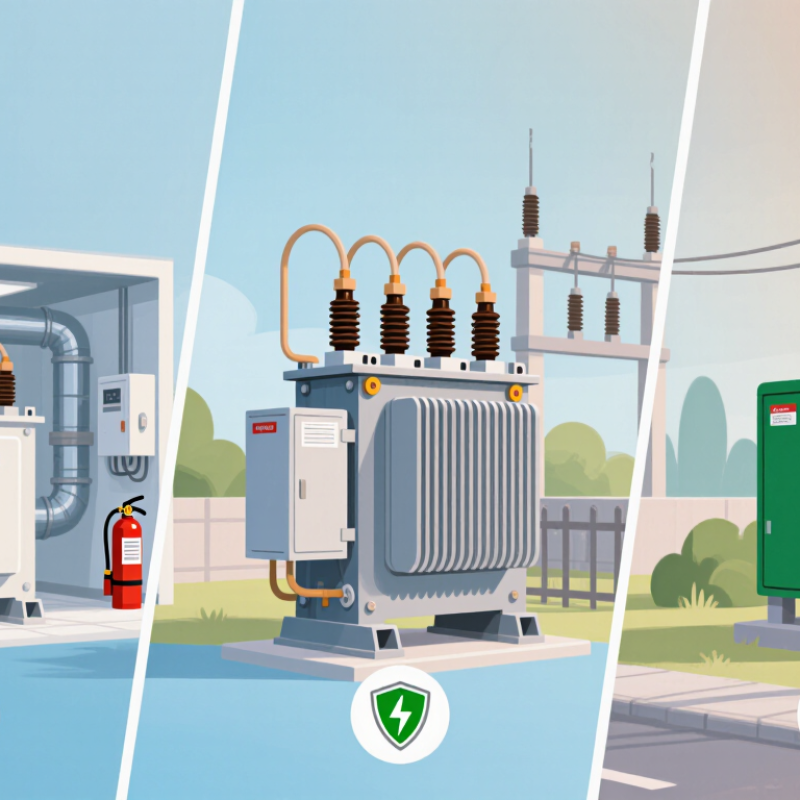
Choosing a Three Phase Transformer is not a catalogue exercise. It is a decision about load profile, site conditions, efficiency, and future expansion. A dry-type unit may suit an indoor facility where fire safety and maintenance access matter. An oil-immersed model may be better for a substation with higher capacity needs and room for suitable containment. Compact pad-mounted designs can simplify outdoor distribution, but access, ventilation, and local service capability still deserve attention.
A useful selection rule is simple: “Match the transformer to the real load, not just the nameplate.” This is an editorially written engineering principle, not a verified quotation from a named individual. We avoid presenting it as a sourced expert quote because no reliable attribution was provided. That distinction matters. Buyers should verify claims against manufacturer data, applicable standards, and project-specific engineering advice.
This guide compares three-phase transformer types for global buyers in 2026, focusing on practical trade-offs rather than broad promises. We look at construction, cooling, installation, efficiency, and maintenance needs. A warm equipment room, a dusty factory floor, and a remote outdoor site can demand very different choices. Small details matter. A specification that overlooks noise limits or spare-parts availability may create avoidable costs later. No type is best in every setting, and this overview is not a substitute for a qualified engineer’s review.
Three-Phase Transformer Basics and Core Operating Principles
A three-phase transformer transfers electrical energy between circuits through electromagnetic induction. It changes voltage levels, but does not change supply frequency. Its primary windings receive three alternating currents, each separated by 120 electrical degrees. These currents create changing magnetic flux in the core. That flux induces voltage in the secondary windings. Simple, but effective.
The turns ratio helps determine the voltage change: more secondary turns generally produce a higher secondary voltage. This relationship assumes ideal conditions. Real transformers also have winding resistance, core losses, and heat to manage. Small losses matter. Core material, insulation, cooling method, and rated frequency all affect performance and service life.
Winding connections shape how a transformer behaves in a system. Star connections can provide a neutral point, while delta connections form a closed three-phase path. The choice affects line voltage, grounding, and how the transformer handles certain loads. A neat diagram can hide practical complications. Buyers should check nameplate voltage, frequency, impedance, and connection details against the actual site supply. Ambient temperature and installation altitude matter, too. When specifications are unclear, confirm them with a qualified electrical engineer before selecting equipment.
Oil-Immersed Three-Phase Transformers: Construction and Applications
2026 Top Three Phase Transformer Types for Global Buyers
Oil-Immersed Three-Phase Transformers: Construction and Applications
An oil-immersed three-phase transformer places its magnetic core and windings inside a tank filled with insulating oil. The oil helps prevent electrical breakdown and carries heat away from the windings. Radiators or cooling fins release that heat into the surrounding air. The tank may use a sealed design or a conservator to accommodate oil expansion. Bushings connect the internal windings to external cables, while optional tap changers help adjust voltage. Details vary by rating and installation.
These transformers are commonly used at utility substations, industrial sites, and larger renewable-energy installations. They suit outdoor service and higher power demands, but their size, oil handling, and maintenance needs matter. Operators should check oil temperature, inspect for leaks, and follow the manufacturer’s testing schedule. A small leak can become a serious maintenance issue. Real sites are rarely as tidy as design drawings suggest.
Tips: Match transformer capacity and voltage to the actual load, including expected growth. Check cooling arrangements, site access, and monitoring needs before purchase. Keep clear maintenance records. When selecting oil type or accessories, confirm compatibility with the equipment specifications and applicable local requirements.
| Design area | Typical construction or data | Purpose and buyer considerations |
|---|---|---|
| Core and windings | A laminated electrical-steel core with three-phase primary and secondary windings. Windings are commonly made from copper or aluminium conductors. | The core and winding design affects losses, temperature rise, impedance, and short-circuit withstand. Confirm these values against the project specification. |
| Insulating liquid | The active parts are immersed in insulating liquid, commonly mineral insulating oil. Suitable ester liquids may be specified for particular environmental or fire-safety requirements. | The liquid provides electrical insulation and transfers heat from the core and windings. Check liquid type, maintenance requirements, fire rules, and spill-containment provisions. |
| Tank and enclosure | A sealed steel tank contains the core, windings, and insulating liquid. Depending on the design, the unit may use a conservator or a sealed tank with a flexible or gas-cushion arrangement. | Tank design accommodates liquid expansion and protects internal parts. Specify outdoor exposure, corrosion protection, installation clearances, and any required containment. |
| Cooling method | ONAN uses natural oil circulation and natural air cooling. ONAF adds forced-air cooling, typically with fans, where the design includes that operating mode. | Cooling selection is linked to the transformer’s rated capacity and temperature-rise design. Consider ambient temperature, altitude, fan power, noise limits, and maintenance access. |
| Voltage adjustment | A de-energized tap changer may provide discrete turns-ratio adjustments while the transformer is isolated. On-load tap changing is available for designs that require voltage adjustment under load. | Tap range and step size are project-specific. Select the tap-changer type based on the required voltage-control method and operating practice. |
| Bushings and connections | Bushings provide insulated paths for electrical connections through the tank. Terminal arrangement, bushing type, and cable or bus connections vary with voltage and installation design. | Confirm system voltage, creepage requirements, phase arrangement, clearances, cable-entry direction, and compatibility with the site’s switchgear. |
| Monitoring and protection | Depending on rating and design, equipment may include a liquid-level indicator, temperature indicators, pressure-relief device, and gas-and-oil-actuated relay on conservator-type units. | Protection should match the transformer construction and the site protection scheme. Specify required alarms, trips, remote signals, and monitoring interfaces. |
| Common applications | Utility distribution, commercial and industrial substations, renewable-energy collection systems, and other installations requiring three-phase voltage transformation. | Match rated power, primary and secondary voltages, frequency, vector group, impedance, losses, and installation conditions to the network and connected loads. |
| Standards and verification | IEC 60076 is a commonly used series of power-transformer standards. Other national or regional requirements may apply to the intended market. | State the required standard and test scope in the purchase specification. Verify routine tests, guaranteed losses, nameplate data, and required documentation. |
Air-Cooled Dry-Type Three-Phase Transformers: Design and Applications
Air-cooled dry-type three-phase transformers transfer power without insulating oil. Their windings use solid insulation, while surrounding air carries heat away through natural airflow or fans. This construction can suit offices, hospitals, workshops, and indoor distribution rooms where oil containment is undesirable. It also simplifies routine visual inspection. Look for clear access around ventilation openings; a blocked grille can quietly raise operating temperatures.
The details matter. Buyers should match voltage, frequency, capacity, and connection configuration to the actual load, not just the equipment nameplate. Check the enclosure rating, expected dust levels, ambient temperature, altitude, noise limits, and harmonic content. A unit serving variable-speed drives may need a different thermal assessment. Fan cooling can support higher loading, but fans add moving parts and require maintenance. Still, dry-type is not automatically the best fit for every site. A cramped room or harsh environment can undermine its practical advantages. Reviewing installation drawings and local technical requirements with a qualified electrical engineer helps expose those trade-offs before delivery. One overlooked cable bend can complicate an otherwise sound installation.
Cast-Resin Three-Phase Transformers: Protection and Applications
Cast-resin three-phase transformers use windings encapsulated in solid insulation, rather than oil for cooling and insulation. This design can reduce the risk of liquid leaks and helps protect windings from dust and moisture when paired with a suitable enclosure. It is not waterproof. Site conditions still matter.
These transformers are commonly considered for indoor installations, including commercial buildings, hospitals, data centers, and industrial facilities. Their compact footprint can help in electrical rooms where floor space is limited. They also avoid the need to manage insulating oil. That helps. But cast resin does not mean fireproof; installation design, ventilation, and protection devices remain important.
For buyers, check the transformer’s rated load, voltage, temperature rise, enclosure rating, and cooling method against the actual site. Ask how the unit performs under heat, humidity, and dust exposure, not only under ideal conditions. Keep clear airflow around the enclosure, and plan routine checks for unusual noise, overheating, or loose connections. One detail is easy to miss: a dry-type unit may still need careful thermal monitoring during peak demand. A qualified engineer should verify the specification and installation requirements before purchase.
2026 Top Three-Phase Transformer Types for Global Buyers
Cast-Resin Three-Phase Transformers: Insulation Thermal Classes
The chart shows reference temperatures for insulation thermal classes according to IEC 60085. Class F and Class H insulation systems are commonly specified for cast-resin dry-type transformers. These values classify the insulation system; they are not ambient-temperature ratings or a guarantee of a particular transformer’s operating performance.
How Global Buyers Compare Ratings, Standards, and Installation Requirements
Global buyers comparing three-phase transformer types should match the unit to the site, not just the purchase price. Liquid-filled models often suit outdoor, higher-capacity installations; dry-type units are commonly considered indoors where spill management matters. Pad-mounted designs can simplify distribution layouts, but still require clear access and site-specific protection. Details matter.
Compare rated capacity in kVA or MVA, primary and secondary voltages, frequency, impedance, winding connection, and cooling method. A 50 Hz system cannot be treated as interchangeable with a 60 Hz system without checking the design. Ask for the temperature-rise rating, insulation level, tap range, and loss data, too. Standards vary by market and project: IEC 60076 and IEEE C57 are common reference families, but the applicable specification must be confirmed with the utility or project engineer.
Installation requirements can change the shortlist. Check foundation loading, overall dimensions, lifting points, ventilation clearances, ambient temperature, altitude, noise limits, grounding, and cable-entry direction before ordering. For an indoor dry-type transformer, measure the room and door openings; a unit that fits on paper may not fit through the access route. Outdoor liquid-filled equipment also needs suitable containment and separation distances under local requirements. One detail is easy to miss: accessory locations can affect maintenance access. Review the outline drawing and connection diagram with the installer, then verify assumptions against the actual site.