Why Use an Air Scrubber With HEPA Filter?
Indoor air can look clean while carrying fine dust, smoke, mold spores, and other airborne particles. That is why many contractors, restoration teams, and facility managers consider an air scrubber with hepa filter for demanding cleanup environments. A properly selected unit draws contaminated air through staged filtration, captures particles, and returns cleaner air to the room. The result is not instant perfection. It is controlled reduction.
Dr. Shelly Miller, an indoor-air-quality researcher, states, “Ventilation is a key part of reducing airborne transmission.” Her point matters because filtration works best within a broader air-quality plan. A portable scrubber cannot correct every problem. It cannot remove every chemical vapor, fix hidden moisture, or replace source control. Those limits deserve honest attention.
In a real renovation area, drywall dust settles on window ledges, while a poorly sealed door leaks particles into nearby rooms. A sealed HEPA filter, suitable airflow, and correct placement can make a visible difference. Check the filter rating. Check the clean-air delivery rate. Check the noise level, too.
Small details matter.
Experienced professionals also inspect duct connections, prefilters, pressure changes, and maintenance records. A neglected filter can restrict airflow and reduce performance. In some cases, a larger unit running at a lower speed may work better than a small, loud machine. That is not always obvious.
Choosing an air scrubber with hepa filter should therefore involve room size, contaminant type, operating time, and user safety. Evidence supports careful filtration, but marketing claims still require scrutiny. Clean air is a process, not a promise.
What Is an Air Scrubber With a HEPA Filter?
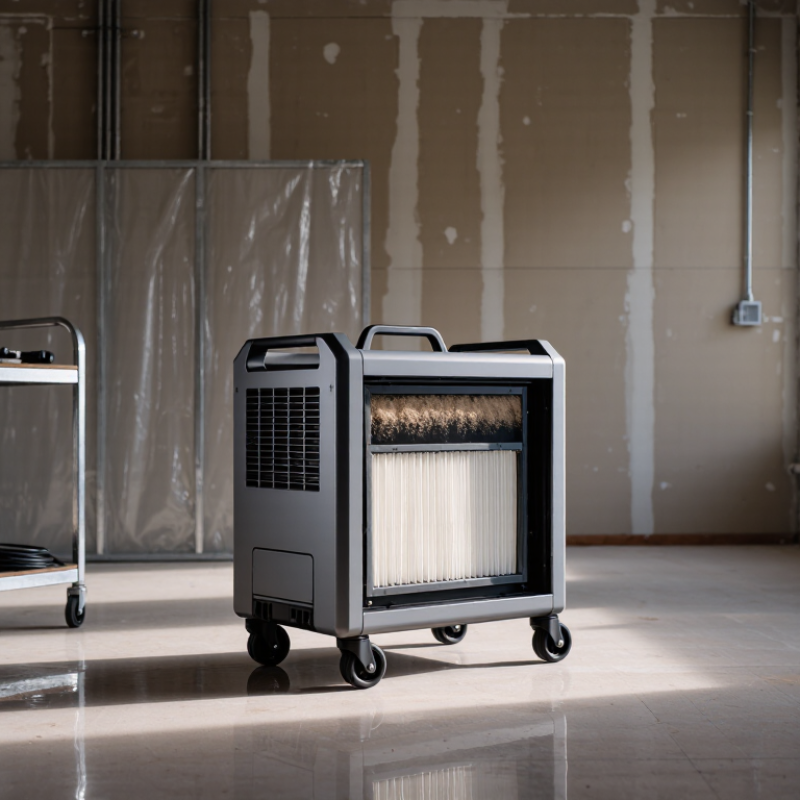
An air scrubber with a HEPA filter is a portable machine that cleans contaminated indoor air. A powerful fan pulls room air through several filtration stages. A pre-filter catches larger particles, such as dust and drywall debris. The HEPA filter then traps very small airborne particles, including fine dust, pollen, and many mold spores.
HEPA filters are commonly tested to capture at least 99.97% of particles measuring 0.3 microns. This size is difficult to capture, so it provides a useful performance benchmark. The cleaned air returns to the room through the outlet. Flexible ducting can also direct filtered air outside or create negative pressure in a work area.
It needs careful setup.
In practice, placement matters as much as filter quality. A technician may position the unit near the pollution source, seal doors, and monitor airflow with a pressure indicator. A poorly sealed cabinet or clogged filter can reduce performance quickly. The machine also cannot remove every chemical vapor or unpleasant gas unless it includes a suitable gas-adsorbing filter.
A real inspection should consider room size, airflow rate, filter condition, and the source of contamination. Operators should wear appropriate protection when handling mold or heavy dust. One detail is easy to overlook: an air scrubber cleans airborne particles, but it does not remove settled contamination from carpets, walls, or furniture. Those surfaces still require proper cleaning. Its value is practical, but it is not a magic box.
How HEPA Filtration Removes Airborne Contaminants
Why Use an Air Scrubber With HEPA Filter?
How HEPA Filtration Removes Airborne Contaminants
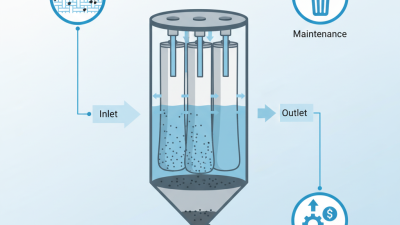
An air scrubber pulls contaminated air through a staged filtration system. A prefilter catches larger dust, fibers, and debris. The HEPA stage handles much smaller particles. It traps them through interception, impaction, and diffusion, rather than acting like a simple sieve. Under recognized testing conditions, a true HEPA filter can capture at least 99.97% of particles measuring 0.3 micrometers. This size is often used as a challenging benchmark.
The result is cleaner air around renovation zones, water-damaged rooms, workshops, and other dusty areas. In practice, placement matters. I look for an intake away from walls and an exhaust that supports steady circulation. Sealed housing is essential; air bypassing the filter can defeat impressive test data. Many units also connect to temporary ducting, helping direct filtered air outdoors or into a controlled space. That setup requires careful pressure planning.
HEPA filters do not remove every gas, odor, or vapor. Activated carbon may help with selected odors, but it has limits. Filter loading also changes performance, noise, and airflow. A pressure gauge or scheduled inspection can reveal problems before they become obvious. I have found that users sometimes replace filters too late. That is a fair warning, but not a universal rule. Dust levels, operating hours, and filter quality vary. Manufacturer instructions and independent test records deserve a closer look than marketing language.
Why Air Scrubbers Improve Indoor Air Quality
Why Use an Air Scrubber With HEPA Filter?
Indoor air quality can change quickly during renovation, cleaning, or water damage. Dust may settle on shelves, curtains, and floor edges. An air scrubber with a HEPA filter pulls contaminated air through dense filtration and returns cleaner air to the room. Properly tested HEPA filters can capture very small particles, including fine dust, mold spores, and some airborne allergens. They do not remove every pollutant.
The main benefit is continuous particle reduction. This matters in bedrooms, classrooms, workshops, and other occupied spaces. A carbon stage may help with certain odors and gases, but HEPA alone is not an odor solution. It is easy to expect too much from one machine. Source control, ventilation, and moisture management still matter. Placement also affects performance. Keep the intake away from walls, and check whether airflow reaches the entire room. Filter loading can reduce airflow, sometimes before the machine sounds different.
Tips:
Choose a unit rated for the room size. Seal obvious dust sources when possible. Replace loaded filters safely. Monitor noise, airflow, and indoor humidity. A simple particle monitor can reveal changes, but it cannot measure every pollutant. That limitation deserves attention.
Key Applications for Air Scrubbers With HEPA Filters
Air scrubbers with HEPA filters are useful when airborne particles must be controlled quickly. Their main applications include construction, renovation, water-damage restoration, and mold cleanup. Cutting drywall can release fine dust that settles on shelves, vents, and equipment. A properly placed scrubber captures much of this particulate before it spreads beyond the work area. It also helps protect occupants who remain nearby.
Restoration teams often use these machines inside temporary containment zones. The unit can support negative air pressure when connected to suitable ducting. This reduces the chance of contaminated air moving into clean rooms. In hospitals, laboratories, and other sensitive facilities, scrubbers may support local dust control during maintenance. However, they must match the room volume and expected particle load. Bigger is not always better.
Effective use requires more than switching the machine on. Technicians should inspect seals, replace loaded prefilters, and monitor airflow during the project. A clogged filter can reduce performance and increase operating noise. The equipment does not remove every hazard, and it cannot replace source removal, cleaning, or protective procedures. That limitation is easy to overlook. In practice, placement often needs adjustment after observing dust movement, door gaps, and worker traffic. A careful setup may be less dramatic, but it is usually more dependable.
How to Choose and Operate the Right Air Scrubber
Why Use an Air Scrubber With HEPA Filter?
How to Choose and Operate the Right Air Scrubber
Choosing an air scrubber starts with the room, not the product label. Measure the room’s length, width, and height. Then compare its clean air delivery rate with the airflow needed for the target air changes per hour. U.S. EPA reports that indoor pollutant levels can be two to five times higher than outdoor levels. A properly fitted HEPA filter can capture at least 99.97% of 0.3-micron particles, according to U.S. Department of Energy guidance. However, HEPA filtration does not remove every gas or vapor.
Select a unit with a sealed filter chamber, a replaceable prefilter, and clear airflow data. ASHRAE Standard 52.2 provides a recognized method for evaluating filter performance. In field practice, undersized equipment often runs loudly but cleans slowly. That is an easy mistake. Place the scrubber where air can circulate freely, then keep doors and windows controlled when practical. Check filters daily during dusty work. Replace them when airflow drops, not only when they look dirty. This judgment can be imperfect.
Tips: Use a simple airflow test with a tissue or smoke pencil, where permitted. Keep the intake away from walls and debris. Avoid units that intentionally generate ozone. Record room size, operating hours, filter changes, and observed dust levels. These notes help refine the next setup. Noise still matters. A machine nobody runs cannot clean the air.
Why Use an Air Scrubber With a HEPA Filter?
A properly rated HEPA filter is commonly tested to remove at least 99.97% of 0.3 µm particles under specified test conditions. The air scrubber's airflow, room volume, filter loading, and housing seal determine the actual cleaning performance.
How to use this chart: For a planning target of 5 air changes per hour (ACH), select an air scrubber whose verified airflow meets or exceeds the required value for the room volume. The calculation is required airflow = room volume × ACH ÷ 60. Use the manufacturer's certified airflow at the installed filter condition, not only the free-air rating, and replace or clean filters according to pressure-drop and maintenance requirements.
Example planning values: 5 ACH is a benchmark for comparison, not a universal requirement. HEPA efficiency ratings are test-condition values and do not by themselves specify room-level removal rates.