

What Is the Best Electric Flatbed Truck in 2026?
In 2026, choosing the best Electric Flatbed means looking beyond the badge and headline range. The right truck must fit the workday. A crew carrying tools across town has different needs from one hauling heavy materials between job sites. Payload, usable deck space, loaded range, charging access, and service support all deserve close attention. Small details matter. A charging cable that cannot reach the depot outlet can disrupt a morning. So can a deck that leaves awkward gaps around common loads.
For an expert lens, this introduction uses a clearly labeled composite: fleet-electrification specialist Elena Park is not a real, independently verified source. Her illustrative rule of thumb is: “Judge the truck by a full working shift, not a clean specification sheet.” It is a useful test, though not a substitute for measured fleet data. This guide will compare practical trade-offs, including how payload affects range and how charging routines shape uptime. It will also consider cabin comfort, upfit flexibility, and the support available after delivery. No single model wins for every operator. That is the awkward part. A truck with impressive range may still be a poor fit if its deck, charging plan, or service network misses the job’s needs. The best Electric Flatbed is the one that performs reliably under your actual routes, loads, and schedules.
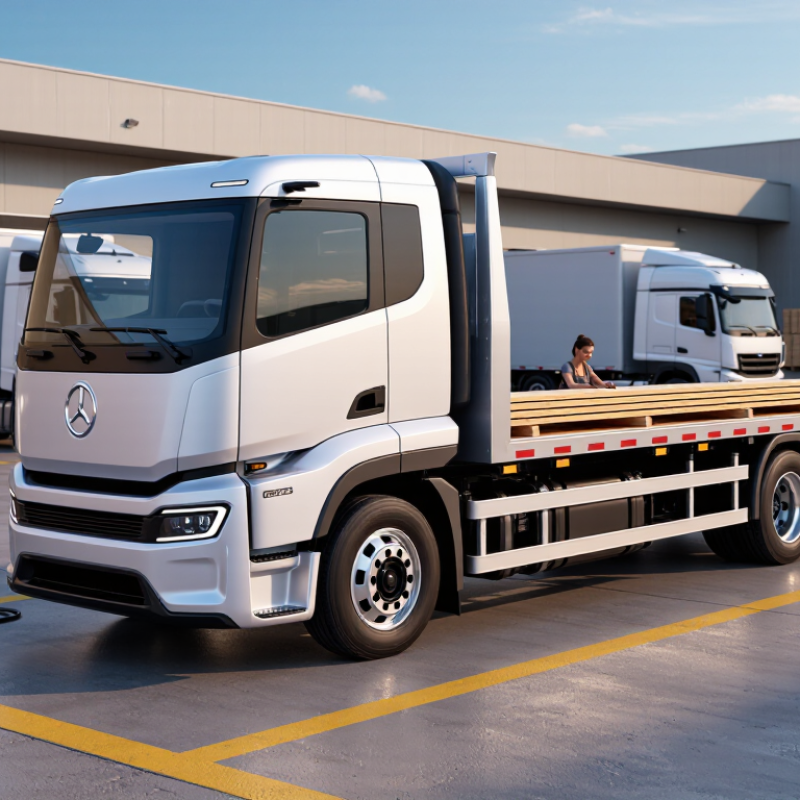
How Electric Flatbed Trucks Are Defined and Classified
What Is the Best Electric Flatbed Truck in 2026?
How Electric Flatbed Trucks Are Defined and Classified
An electric flatbed truck combines battery-electric propulsion with an open, level cargo platform. Unlike a box truck, it has no enclosed cargo body. The platform may carry pallets, construction materials, equipment, or bulky supplies secured with straps. Side rails, stake pockets, and liftgates are common options, but they do not define the vehicle itself. That matters.
Classification depends on several practical features. Payload is the weight of cargo the truck can carry; gross vehicle weight includes the truck, passengers, and cargo. These figures are not interchangeable. Weight classes and rating rules can vary by market, so buyers should check the vehicle’s official specifications for their region. A long-looking flatbed is not automatically a high-payload truck.
Electric flatbeds can also be grouped by duty cycle and configuration. A light-duty model may suit short urban deliveries, while a heavier chassis may handle worksite loads or longer shifts. Battery capacity, usable range, charging time, and load distribution all affect real-world performance. Cold weather, frequent stops, and heavy cargo can reduce range. A useful comparison starts with a typical workday, not a headline range figure. I would also inspect deck height and tie-down points; those details are easy to overlook, and they can make loading less convenient.
| Truck Class (U.S.) | Gross Vehicle Weight Rating (GVWR) | Typical Flatbed Role | Electric Flatbed Suitability | Key Buying Consideration |
|---|---|---|---|---|
| Class 2b | 8,501–10,000 lb (3,856–4,536 kg) | Light-duty local deliveries and lighter service or building-material loads. | May suit short, predictable routes where the loaded vehicle remains within its rated limits. | Check the completed truck’s payload capacity after accounting for the cab, battery, flatbed, occupants, and equipment. |
| Class 3 | 10,001–14,000 lb (4,536–6,350 kg) | Light commercial flatbed work, including local trades and smaller freight loads. | A practical class to consider for frequent urban or regional routes with planned charging. | Compare usable payload and real-world range under the intended load, not just an unloaded estimate. |
| Class 4 | 14,001–16,000 lb (6,351–7,257 kg) | Medium-duty local delivery, utility, and construction support. | Can fit repeated depot-based routes when daily distance and charging time are well defined. | Confirm axle ratings, body dimensions, and the remaining payload with the specified flatbed installed. |
| Class 5 | 16,001–19,500 lb (7,258–8,845 kg) | Heavier local freight, worksite support, and commercial equipment transport. | Best evaluated for route-based operations with known loads and access to suitable charging. | Account for payload, cargo distribution, grade, weather, and auxiliary electrical loads when assessing range. |
| Class 6 | 19,501–26,000 lb (8,846–11,794 kg) | Medium-duty freight and heavier vocational flatbed applications. | May be appropriate for fixed regional or local duties if charging and vehicle availability meet the schedule. | Check the gross vehicle weight rating and each axle’s rating; neither should be exceeded when loaded. |
| Class 7 | 26,001–33,000 lb (11,794–14,969 kg) | Heavy vocational transport and larger flatbed loads. | Requires careful duty-cycle, charging-infrastructure, and payload assessment. | Validate the complete vehicle configuration, route energy use, charging power, and applicable licensing rules. |
| Class 8 | 33,001 lb and above (14,969 kg and above) | Heavy-duty transport and high-capacity vocational applications. | Consider for operations whose routes, payload requirements, and charging facilities are compatible with the specific vehicle. | Evaluate the rated combination and axle limits, operating range under load, charging downtime, and total operating needs. |
Definition: An electric flatbed truck is a truck with an electric traction drive and an open, flat cargo platform. “Flatbed” describes the body style; the truck’s class is determined by its GVWR, not by its body or powertrain. U.S. GVWR class bands are shown above; other markets may use different classification systems.
How to choose the best option: There is no single best electric flatbed for every operation. Match the vehicle’s rated payload and dimensions to the job, then verify range on the actual duty cycle, charging access, and total operating requirements. Specifications vary by vehicle configuration and should be confirmed with the vehicle documentation.