

10 Best Oil Rig Components for Global Buyers
Global drilling is entering a more selective phase. The IEA’s Oil 2024 report projects global oil demand to reach about 105.4 million barrels per day by 2030, while growth gradually slows. The World Energy Outlook 2024 also expects oil demand to peak before 2030 under its stated policies scenario. This creates a practical challenge for buyers. Equipment must support production today and remain adaptable tomorrow.
Oil Rig Components are no longer judged by price alone. A mud pump’s pulsation, a worn swivel seal, or a poorly specified blowout preventer can affect safety, uptime, and maintenance costs. Baker Hughes rig-count data shows that active rigs remain a useful indicator of drilling activity, but counts do not reveal component quality. That gap matters. Buyers need traceable materials, verified pressure ratings, reliable documentation, and service support near the operating site.
SPE Fellow Dr. Michael J. Economides has emphasized, “The oil field is a system, not a collection of isolated parts.” That principle shapes this guide to the 10 Best Oil Rig Components for Global Buyers. Each component is considered through reliability, compatibility, inspection needs, and lifecycle value. Still, no ranking is universal. Offshore saltwater, desert dust, deepwater pressure, and remote logistics change the decision. A technically excellent component can fail commercially when spare parts arrive late. That is an uncomfortable point, but it deserves attention. Performance begins with fit, evidence, and disciplined purchasing.
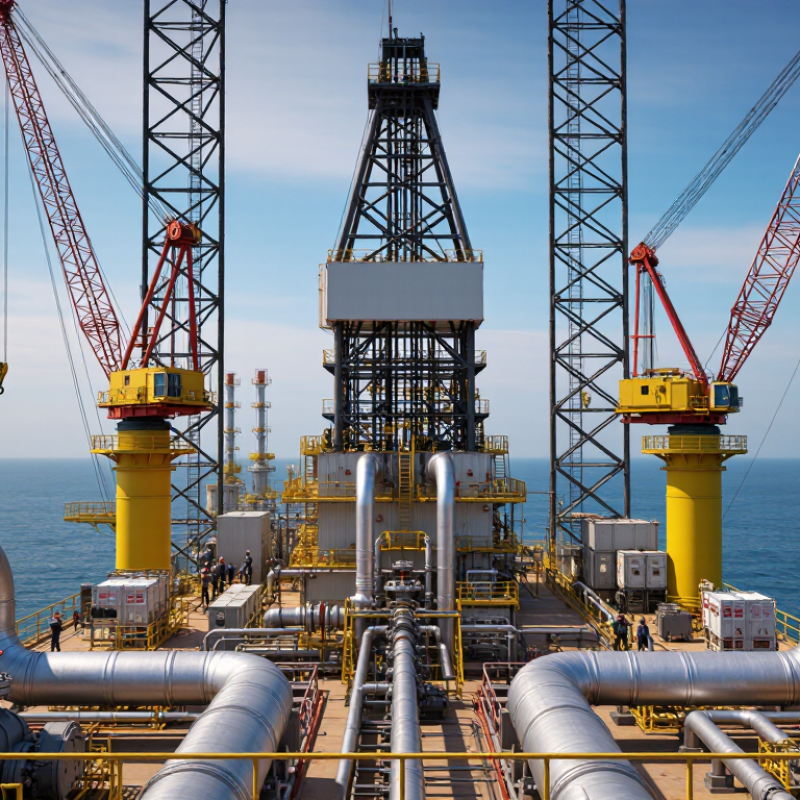
Rig Structure Components: Derrick and Mast
Among the most critical rig structure components are the derrick and mast. They carry drilling loads, support lifting equipment, and protect workers above the rig floor. A derrick is usually assembled from sections, while a mast is often transported and raised as one unit. Small details matter. Inspectors should examine crown connections, bracing members, welds, pins, and bolt torque. Cracks around gusset plates can reveal repeated stress before major damage appears.
During procurement, global buyers should request complete drawings, material certificates, load charts, and inspection records. These documents help confirm whether the structure suits the planned depth, hook load, and operating environment. Connection plates must align accurately during installation. Poor alignment can create uneven loading and premature wear. Do not rely on appearance alone. Check.
Site conditions also influence the right choice. High winds require careful review of the derrick or mast’s stability, anchoring, and allowable working loads. Coastal operations demand stronger corrosion protection and more frequent inspections. Transport limits may affect section length, lifting points, and assembly time. A practical evaluation should include spare pins, access platforms, emergency descent systems, and clear maintenance procedures. No design is perfect. A spreadsheet may overlook a difficult lift, a muddy foundation, or limited crane access. Experienced buyers should challenge the paperwork against real site conditions before approving the structure.
10 Best Oil Rig Components for Global Buyers - Rig Structure Components: Derrick and Mast
A practical comparison of essential derrick and mast structural components used in land and offshore drilling systems.
| No. | Component | Primary Function | Typical Configuration or Range | Common Material | Important Design Criteria | Common Reference Standards |
|---|---|---|---|---|---|---|
| 1 | Derrick Main Legs | Carry the primary compressive and lateral loads of the derrick structure. | Four-leg lattice frame; height commonly selected according to required setback, racking capacity, and mast configuration. | Welded structural alloy steel, typically supplied with documented mill certificates. | Rated hook load, wind loading, fatigue resistance, buckling control, weld quality, and corrosion protection. | API Spec 4F; ISO 13535; applicable structural steel and welding codes. |
| 2 | Mast Sections | Provide a transportable, telescoping, or jackknife support for the crown and hoisting system. | Two- or three-section design; generally assembled with pinned or bolted connections for field erection. | High-strength low-alloy steel or quenched-and-tempered structural steel. | Erection sequence, transport dimensions, connection tolerances, dynamic loads, and wind stability. | API Spec 4F; API RP 54; ISO 13535. |
| 3 | Crown Block Support Frame | Supports the crown block and transfers hoisting loads into the derrick or mast. | Reinforced top frame with load-bearing beams, gussets, inspection platforms, and tie-in points. | Structural carbon or alloy steel with wear-resistant connection hardware. | Concentrated sheave loads, impact factors, alignment, access for maintenance, and platform safety. | API Spec 4F; API Spec 8C for hoisting equipment interfaces. |
| 4 | Crown Block and Sheave Assembly | Redirects and supports the drilling line during raising, lowering, and suspended-load operations. | Multiple grooved sheaves sized for the drilling line diameter and the required line arrangement. | Forged or cast alloy-steel sheaves; steel frame; sealed or lubricated bearings. | Sheave-to-rope diameter ratio, bearing load, groove profile, guarding, braking loads, and inspection access. | API Spec 8C; API RP 9B; applicable wire-rope inspection requirements. |
| 5 | Monkey Board and Racking Platform | Provides an elevated work position for pipe handling and organizes tubulars in the setback area. | Tubular racking capacity commonly specified by pipe size, setback load, and fingerboard arrangement. | Structural steel grating, tubular frames, impact-resistant pipe guides, and safety barriers. | Rated setback load, slip resistance, fall protection, ergonomic access, drainage, and tubular retention. | API Spec 4F; OSHA or equivalent local occupational-safety requirements. |
| 6 | Racking Board and Fingerboard | Separates and stabilizes stands of drill pipe, casing, or other tubulars above the rotary table. | Fixed or adjustable fingers; spacing selected to match tubular outside diameter and stand arrangement. | Structural steel frame with replaceable wear pads or pipe-contact components. | Tubular compatibility, impact resistance, load distribution, corrosion protection, and safe manual handling. | API Spec 4F; site lifting and tubular-handling procedures. |
| 7 | Guy Lines and Mast Bracing | Control lateral movement and improve stability under wind, operational, and erection loads. | Wire-rope or rigid-brace systems arranged according to the mast design and foundation layout. | Galvanized or ungalvanized high-strength wire rope, turnbuckles, shackles, and structural braces. | Pretension, anchor capacity, fatigue, corrosion, termination efficiency, and regular visual inspection. | API Spec 4F; API RP 9B; ASME B30.26 for rigging hardware where applicable. |
| 8 | Mast Raising and Lowering System | Raises, lowers, or erects the mast during rig mobilization and dismantling. | Hydraulic cylinders, drawworks-assisted systems, or hinged erection mechanisms with locking devices. | High-strength steel cylinders, pins, clevises, hydraulic lines, and mechanical locking components. | Controlled movement, hydraulic pressure capacity, emergency retention, pin security, and operator visibility. | API Spec 4F; API RP 54; applicable hydraulic and lifting-equipment requirements. |
| 9 | Base Hinge, Pins, and Mast Footings | Transfer mast reactions to the substructure and permit controlled pivoting during erection. | Heavy-duty pinned joints with replaceable bushings, thrust surfaces, and engineered foundation interfaces. | Forged alloy-steel pins, machined bushings, and reinforced structural-steel base plates. | Shear and bearing stress, pin retention, alignment, lubrication, foundation settlement, and inspection access. | API Spec 4F; structural design codes applicable to the installation location. |
| 10 | Access Platforms, Ladders, and Fall-Protection Systems | Enable inspection, maintenance, and safe movement around the derrick or mast. | Grated walkways, fixed ladders, handrails, toe boards, vertical lifelines, and designated anchor points. | Hot-dip galvanized or coated structural steel; stainless or corrosion-resistant hardware where required. | Working load, slip resistance, ladder angle, guardrail height, dropped-object control, and corrosion environment. | API Spec 4F; ISO 14122; OSHA or equivalent local fall-protection regulations. |