China Top Metering Equipment Manufacturers
China’s metering industry supplies equipment for water, gas, heat, and industrial process measurement. Its manufacturers range from specialized producers to companies with broad product lines. For buyers comparing China Top Metering Equipment Manufacturers, the challenge is not simply finding a low price. It is matching a meter’s range, accuracy, materials, and connection type to the actual operating conditions.
Metering Equipment can look similar in a product photograph, yet perform differently in the field. Pipe diameter, fluid temperature, pressure changes, and installation space all affect the choice. A clear specification sheet helps, but it is only a starting point. Ask how accuracy is tested, what calibration records are available, and whether replacement parts and technical support can be provided over time. Small details matter.
This guide outlines practical ways to assess manufacturers and compare their capabilities. It considers product coverage, manufacturing experience, quality controls, customization, and communication during the purchasing process. Buyers should verify certificates and performance claims against the requirements of their own project rather than relying on broad marketing language. Even a well-matched meter can disappoint if installation or maintenance is overlooked. And supplier information can change. Careful checks remain worthwhile. The aim is a grounded shortlist, not a promise that one company suits every application.
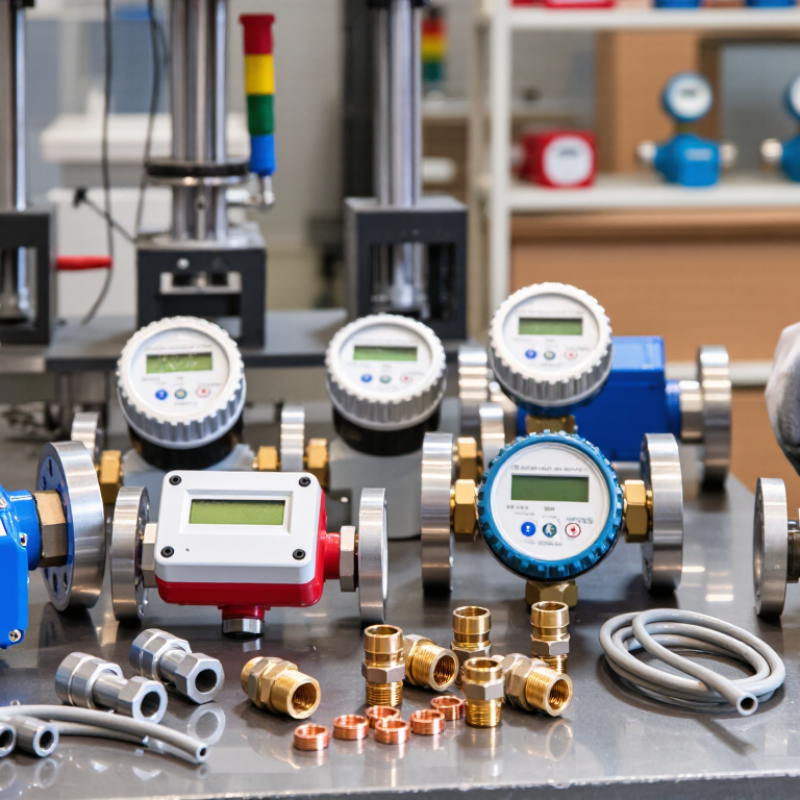
Metering Equipment: Definition, Functions, and Applications
Metering equipment measures the quantity or flow of a substance, energy, or material over time. Depending on the system, it may track water volume, gas consumption, electrical use, or liquid moving through a production line. A meter can include a sensor, a measuring element, and a display or data output. The right design depends on what is measured and the conditions around it. Temperature, pressure, pipe size, and changing flow rates all matter.
Small errors matter. Accurate readings help operators monitor usage, manage costs, detect unusual changes, and keep processes consistent. In a water network, for example, flow data can help identify a leak when night-time consumption rises unexpectedly. In a factory, meters can record ingredients added to a batch or fluid delivered to a machine. Across China’s manufacturing sector, suppliers serve applications ranging from building utilities to industrial processing, but specifications should be checked against the actual installation. A meter selected only by connection size may perform poorly if its operating range is unsuitable.
Metering equipment also needs thoughtful installation and routine verification. Dirt, vibration, wear, or incorrect setup can affect readings. Calibration is not a one-time detail. It is easy to overlook when equipment appears to work normally, and that assumption deserves review. Clear records of operating conditions and maintenance make readings more useful and easier to trust.
China’s Metering Equipment Industry and Its Development
China’s metering equipment industry is moving beyond simple consumption recording. The National Energy Administration reported that renewable power capacity reached about 1.89 billion kilowatts in 2024, roughly 56% of national generation capacity. More wind and solar connections require meters that track power flowing in both directions. They also need accurate time-stamped readings.
This shift is visible at the distribution level. A rooftop solar meter, for example, must distinguish household use from electricity sent back to the grid. The scale is substantial.
Demand growth adds pressure. The China Electricity Council reported national electricity consumption of 9.22 trillion kilowatt-hours in 2023, up 6.7% year on year. For manufacturers, this raises the importance of stable calibration, clear data interfaces, and reliable performance in varied conditions.
A meter may sit outdoors through heat, cold, and dust. Small measurement errors can complicate billing and grid planning. Yet installing advanced meters alone does not guarantee better energy management. Communication networks and data practices matter too.
This part of development deserves more attention. Industry reports describe rapid capacity growth, but field performance can be less uniform than headline figures suggest.
Major Product Categories Made by Chinese Manufacturers
Chinese manufacturers produce several distinct metering categories, each suited to a different measurement task. Electricity meters range from basic single-phase units to smart meters that record usage by time interval. Water meters include mechanical, ultrasonic, and remotely read models; gas meters commonly measure household flow, while heat meters track energy across heating systems. Industrial lines add flow, pressure, and temperature instruments. Small details matter: pipe diameter, installation angle, and communication signal can affect field performance.
The China Electricity Council reported 9,220 terawatt-hours of electricity consumption in 2023. That scale helps explain demand for dependable electricity measurement and grid-side data collection. The International Energy Agency’s Electricity 2024 report projected global electricity demand would grow by an average 3.4% annually through 2026. Such growth makes accurate metering increasingly useful, though a connected meter is not automatically a precise one.
For buyers, compare measurement range, accuracy class, enclosure protection, and data-output options against the actual site conditions. A water meter in a cramped utility box faces different constraints from a heat meter in a central heating loop. Product specifications are informative, but installation and calibration records deserve equal attention. This point is easy to overlook. The best category depends on the medium, operating conditions, and how readings will be used.
Leading Chinese Metering Equipment Manufacturers and Their Specialties
China Top Metering Equipment Manufacturers
Leading Chinese metering equipment manufacturers serve utilities, factories, and building operators with distinct product specialties. Some focus on electricity meters, measuring voltage, current, and energy use in homes or commercial sites. Others make water and gas meters, where stable readings at low flow rates can matter as much as durability. Industrial suppliers often build flow, pressure, or temperature instruments for process lines. Details matter.
Many manufacturers combine hardware with remote-reading functions, such as wireless data transmission and alarms for unusual consumption. This can reduce manual checks, but performance depends on installation, network coverage, and compatible software. For buyers, useful evidence includes test reports, calibration procedures, operating ranges, and clear guidance for maintenance. Ask how a meter behaves when flow is intermittent or temperatures fluctuate. A polished datasheet is not proof of field performance.
Specialties also differ by production scale and customization. One supplier may offer compact meters for apartment risers, while another supports larger industrial pipelines and tailored connection sizes. Check the stated accuracy class, materials in contact with the measured medium, and service access before comparing prices. A small omission can become a practical problem. Manufacturer claims deserve verification, and the right choice depends on the actual operating conditions, not only the product category.
China’s Metering Equipment Manufacturers: Electricity Meter Accuracy Classes
Accuracy classes are a key specification for electricity meters. The chart shows common IEC active-energy meter class designations; lower class numbers indicate tighter accuracy requirements. Actual permissible errors depend on the applicable standard and test conditions. This is a standards-based comparison, not company or brand data.
How to Evaluate Manufacturers, Standards, and Export Capabilities
When comparing Chinese metering equipment manufacturers, examine the measurement range, not just the headline accuracy figure. Request calibration records linked to identifiable instruments, and check how often verification is performed. Ask for test results at low, nominal, and peak loads; readings can shift across that span. A neat certificate is not enough. Confirm that its scope covers the exact model and test conditions.
Tips: Compare the same specifications across suppliers. Ask for sample reports, inspection procedures, and details about component traceability. Check whether stated standards match the destination market and product type. Request current documents, not a screenshot from an old presentation. Small details matter.
Export capability shows in practical routines. Ask how products are packed against moisture and vibration, and request a sample packing list. Confirm lead times, spare-parts availability, warranty handling, and technical support across time zones. Clarify which export documents the manufacturer routinely prepares, then have your own logistics team review them. A factory visit or live production review can reveal gaps that sales materials miss. I would still leave room for doubt: a smooth first shipment does not prove consistent quality, so agree on incoming inspection criteria before ordering.
China Top Metering Equipment Manufacturers - How to Evaluate Manufacturers, Standards, and Export Capabilities
Supplier evaluation scorecard for electricity metering equipment. Use the criteria and evidence below to compare prospective manufacturers; the weights are suggested buyer-assigned priorities, not ratings of any specific company.
| Evaluation Dimension | Suggested Weight | What to Evaluate | Relevant Standards or Requirements | Evidence to Request |
|---|---|---|---|---|
| Regulatory compliance and market access | 25% | Confirm that the specific meter model, intended use, and target-market configuration meet applicable legal requirements. Check that certificates and declarations match the model and factory. | For applicable EU electricity meters, Directive 2014/32/EU (MID), including MI-003. CE marking applies only where relevant EU legislation requires it; it is not, by itself, proof of product quality or metrological approval. RoHS requirements may also apply, subject to scope and exemptions. | Model-specific certificates and test reports; EU Declaration of Conformity where applicable; certificate scope and validity; product labels and technical documentation; confirmation of the responsible economic operator where required. |
| Metrological performance | 20% | Match accuracy class, current range, voltage, frequency, connection type, and operating conditions to the project specification. Verify the tested configuration is the one being offered. | IEC 62052-11 covers general requirements, tests, and test conditions for applicable AC electricity metering equipment. IEC 62053-21 and IEC 62053-22 specify particular requirements for static active-energy meters in their respective accuracy classes; IEC 62053-23 covers static reactive-energy meters. | Type-test reports from a competent laboratory; accuracy test records across the specified load range; nameplate and datasheet; calibration procedures; traceability details for reference equipment. |
| Quality management and testing | 15% | Assess documented production controls, incoming inspection, calibration management, nonconformance handling, corrective action, and lot traceability. Verify certificate scope and site coverage. | ISO 9001 is a quality-management-system standard. ISO/IEC 17025 specifies competence requirements for testing and calibration laboratories; laboratory accreditation does not automatically certify the product. | Current quality-system certificate and scope; factory audit or process-audit records; sample inspection plans; calibration records; test-laboratory accreditation scope; example batch traceability records. |
| Manufacturing capacity and supply continuity | 15% | Evaluate demonstrated output for the required meter type, production lead time, capacity allocation, component sourcing, change control, and contingency arrangements. | No single international standard establishes a supplier’s production capacity. Assess capacity against the buyer’s forecast, delivery schedule, and contract requirements. | Recent production and shipment records with sensitive information redacted; stated monthly capacity by product type; lead-time commitments; production plan; business-continuity and component-change procedures. |
| Interoperability and communications | 10% | Check that communication interfaces, data exchange, firmware functions, and system integration match the buyer’s head-end and local requirements. Confirm the exact protocol profile and supported features. | The IEC 62056 series addresses electricity-metering data exchange, including DLMS/COSEM-related specifications. Applicable parts and implementation profiles depend on the interface, use case, and project requirements. | Protocol conformance or interoperability test results; interface and register documentation; supported profile list; sample data; firmware version and change history; integration test records. |
| Export documentation and logistics | 10% | Verify the supplier can prepare consistent export documents and meet destination-specific packaging, labeling, shipping, and customs requirements. Confirm delivery terms and who handles each export step. | Required documents and customs classification depend on the product, destination, transaction, and delivery terms; there is no single universal export-document set for every shipment. | Redacted examples of commercial invoices, packing lists, shipping documents, and certificates of origin where applicable; proposed Incoterms® rule and named place; packaging specifications; shipment references. |
| Warranty and after-sales support | 5% | Review warranty coverage, response times, spare-parts availability, repair or replacement workflow, technical support language, and firmware maintenance commitments. | Support obligations should be stated in the commercial contract and aligned with local consumer, utility, and product rules where applicable. | Written warranty terms; service-level commitments; escalation contacts; spare-parts policy; return-material authorization procedure; support and firmware-update policy. |
| Total suggested weighting | 100% | Score each dimension against the buyer’s project requirements and retain the supporting evidence for audit and procurement review. | ||
Scoring guidance: Apply a consistent internal scale, such as 0 = no verifiable evidence, 1 = partial evidence, and 2 = complete and independently verifiable evidence. Confirm the current edition and applicability of each standard with the relevant standards body or conformity-assessment authority before procurement. Requirements vary by meter type and destination market.