

Top Electric Distribution Box Types for Global Buyers
Electricity systems are expanding, decentralizing, and taking on more rooftop solar, electric vehicle chargers, and digital controls. For global buyers, choosing an Electric Distribution Box is not just a matter of matching voltage and price. The enclosure, busbar arrangement, circuit capacity, and installation environment all affect safe, dependable operation. Details matter.
The International Energy Agency’s Electricity 2025 report estimates that global electricity demand grew by 4.3% in 2024. Its 2023 report, Electricity Grids and Secure Energy Transitions, says annual grid investment needs to rise above USD 600 billion by 2030. These figures describe broad system pressures, not a forecast for distribution-box sales. Still, they help explain why buyers are comparing equipment for homes, commercial buildings, industrial sites, and outdoor installations.
This guide introduces common types, including consumer units, panelboards, modular distribution boards, and weather-resistant enclosures. Each serves different installation needs. A compact indoor board may suit a small building, while a larger panel can support more circuits and future expansion. Outdoor sites require careful attention to enclosure protection and local conditions. Fit comes first. No single specification works everywhere. Procurement teams should verify ratings, documentation, and compatibility with qualified electrical professionals before ordering. Product names and configurations also vary between markets, so a familiar label may not mean identical construction. That detail is easy to overlook. IEA reports provide useful context, but buyers still need project-specific engineering checks.
What an Electric Distribution Box Is and How It Works
Top Electric Distribution Box Types for Global Buyers
What an Electric Distribution Box Is and How It Works
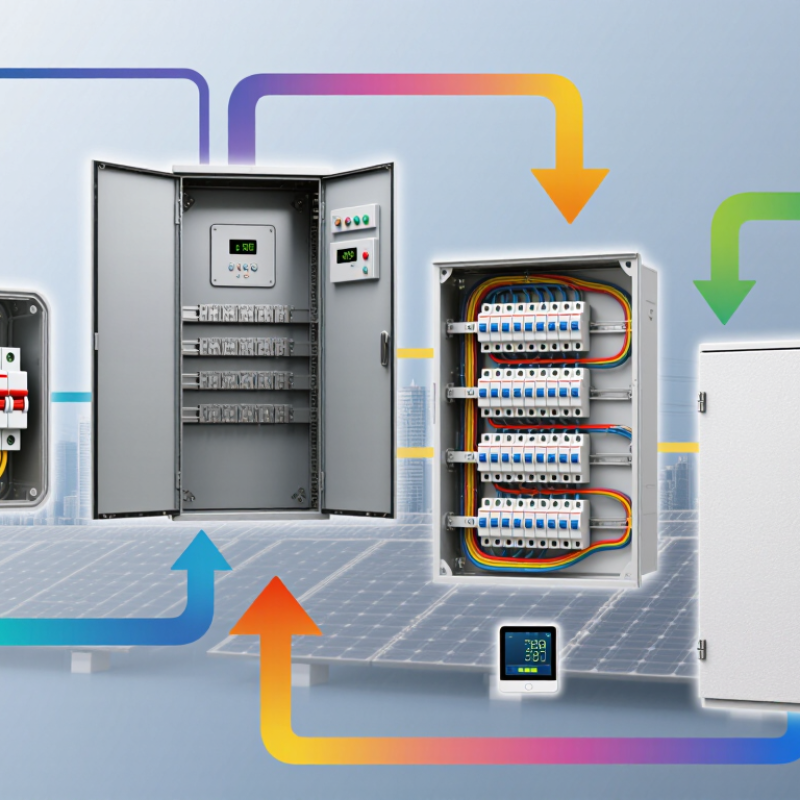
An electric distribution box receives power from an incoming supply and divides it among separate circuits. Inside, metal busbars carry current to protective devices, such as circuit breakers. Each breaker serves a branch circuit, such as lighting, sockets, or machinery. If a circuit overloads or develops a fault, its breaker interrupts the current. The enclosure also protects live components from accidental contact and helps keep wiring organized. Common formats include residential consumer units and larger commercial or industrial distribution boards.
The wider context matters. The International Energy Agency’s Electricity 2024 report projected global electricity demand would grow by an average of 3.4% annually from 2024 to 2026. That forecast concerns electricity demand, not distribution-box sales, but it highlights the importance of dependable power distribution. Box selection depends on supply voltage, expected load, fault level, environment, and room for future circuits. A compact enclosure may look tidy, yet leave little space for safe wiring or later expansion. That detail is easy to underestimate.
Main Types by Installation and Mounting Method
Mounting method affects access, wiring space, protection, and installation time. Wall-mounted distribution boxes suit workshops, utility rooms, and small commercial spaces. They attach directly to a solid surface, leaving the floor clear. Check the wall material and cable entry points before choosing a location. A box may fit on paper but clash with pipes or door swings. Measure twice.
Flush-mounted boxes sit inside a wall cavity, creating a neater finish. They work best when construction plans allow enough depth for the enclosure, conductors, and safe bending space. Retrofitting one into a finished wall can mean extra cutting and patching. Inspect the cavity first, especially around studs and existing services. The clean appearance is useful, but access for later maintenance should not be sacrificed.
Floor-standing enclosures can serve larger systems where more circuits or room for equipment are needed. They require a level, stable base and clear working space around the doors. Pole-mounted boxes are often used where circuits must reach outdoor equipment, but exposure, cable routing, and enclosure ratings need careful review. Conditions vary by site. Verify load, environment, and access requirements with a qualified electrical professional; small installation details are easy to overlook.
Enclosure Types for Indoor, Outdoor, and Harsh Environments
Indoor distribution boxes usually use painted steel or insulating thermoplastic enclosures. They suit dry rooms, workshops, and equipment cabinets. Check heat buildup around breakers, especially in crowded panels. A compact box can become surprisingly warm. IEC 60529 defines IP ratings: IP6X means dust-tight, while IPX5 indicates protection against water jets. These ratings help compare enclosure protection, but they do not guarantee suitability for every installation.
Outdoor boxes need sealed doors, UV-resistant materials, and drainage details that limit water entry. Stainless steel or coated aluminum can help where rain and corrosion are concerns. In harsh environments, consider chemical exposure, vibration, temperature swings, and cleaning methods. IEC 60529 provides the test framework for ingress protection; select an IP rating based on actual exposure, not appearance alone. An IP rating does not measure corrosion resistance or impact strength.
Tips: Match the enclosure material and IP rating to the site conditions. Check cable-entry glands, door seals, and mounting points before installation. A higher rating is not always better; trapped heat may shorten component life. Recheck seals after maintenance, because small gaps are easy to miss.
Distribution Boxes Classified by Circuit Capacity and Configuration
Distribution boxes are often classified by circuit capacity and configuration. Circuit capacity describes how many outgoing circuits the enclosure can accommodate, not how much total power it can safely carry. Compact four- or six-circuit units may suit small installations with limited loads. Larger homes, workshops, or commercial spaces often need more ways for lighting, outlets, and dedicated equipment. Leave room to grow. Spare positions can make later changes simpler, though they do not replace a proper load assessment.
Configuration also affects selection. Single-phase and three-phase systems require compatible equipment and layouts. A box may use a main breaker or main-lug arrangement, depending on how the supply and upstream protection are designed. Indoor, outdoor, surface-mounted, and recessed versions address different site conditions. Check rated current, voltage, available fault level, enclosure protection, and conductor space against the project requirements. A tidy circuit schedule helps, but it can still miss real usage patterns; actual loads deserve review by a qualified professional.
Tips: Count planned circuits, then allow sensible spare capacity. Verify the box’s ratings and mounting conditions before purchase. Label each circuit clearly. Small details matter.
Top Electric Distribution Box Types for Global Buyers — Classified by Circuit Capacity and Configuration
Typical selection ranges for common low-voltage distribution applications. Actual capacity, dimensions, ratings, and permitted configurations depend on the product design and local electrical codes.
| Distribution Box Type | Typical Circuit Capacity | Common Configuration | Typical Supply | Common Enclosure Options | Typical Applications |
|---|---|---|---|---|---|
| Compact residential consumer unit | 4–12 outgoing circuits | Single-phase; main switch or main breaker with branch-circuit protective devices | Typically 120/240 V or 230 V, depending on region | Flush-mounted or surface-mounted; non-metallic or metal enclosure | Small homes, apartments, extensions, and small ancillary buildings |
| Standard residential distribution board | 12–24 outgoing circuits | Usually single-phase; may include separate neutral and protective-earth bars and dedicated ways for larger loads | Commonly single-phase 120/240 V or 230 V | Flush-mounted or surface-mounted; indoor enclosure | Typical houses and apartments with lighting, socket, and appliance circuits |
| Large residential or multi-unit board | 24–48 outgoing circuits | Single-phase or three-phase; multiple rows or sections, with circuits grouped by area or load | Single-phase or three-phase, commonly 230/400 V in many markets | Surface-mounted, flush-mounted, or cabinet-style indoor enclosure | Large homes, apartment common areas, and small residential buildings |
| Small commercial distribution board | 12–36 outgoing circuits | Often three-phase; main isolator or protective device with branch protection for lighting and power | Commonly three-phase 230/400 V or 120/208 V, depending on region | Wall-mounted metal or non-metal enclosure; indoor use | Small offices, retail units, cafés, and workshops |
| Commercial panelboard | 24–84 outgoing circuits | Typically three-phase; one or more sections, with provisions for branch breakers and load grouping | Three-phase systems such as 120/208 V, 277/480 V, or 230/400 V, depending on market | Floor-standing or wall-mounted metal cabinet; indoor or specified outdoor versions | Offices, schools, hotels, and medium-sized commercial buildings |
| Industrial distribution board | 36–120 or more outgoing circuits | Three-phase; may include a main incomer, busbars, feeder devices, and separately arranged control or power sections | Commonly three-phase low voltage, with voltage selected for the installation | Robust metal cabinet; floor-standing or wall-mounted; enclosure protection selected for the environment | Factories, production areas, utility rooms, and industrial workshops |
| Modular DIN-rail distribution box | Typically 4–72 module positions; circuit count depends on device width | Single-phase or three-phase; modular devices mounted on DIN rails in one or more rows | Selected to match the installation supply and connected equipment | Flush-mounted or surface-mounted; plastic or metal enclosure | Residential, commercial, and light-industrial installations requiring flexible device layouts |
| Outdoor or weather-protected distribution box | Commonly 4–36 outgoing circuits, with larger cabinets available | Single-phase or three-phase; configuration depends on the number and type of protected circuits | Selected to match the site supply | Weather-resistant enclosure; an IP rating suitable for the installation environment is required | Outdoor equipment, site services, garden installations, and building exteriors |
| Temporary site distribution box | Typically 4–24 outgoing circuits or socket outlets | Single-phase or three-phase; may combine protective devices with socket outlets and residual-current protection | Selected for the site supply and connected loads | Portable or wall-mounted enclosure designed for the intended site conditions | Construction sites, events, maintenance work, and temporary power distribution |
Selection note: “Circuit capacity” refers to typical outgoing circuits, not a guaranteed rating. DIN-module positions are not the same as circuit count because protective devices can occupy different numbers of modules. Confirm rated voltage, current, short-circuit withstand, enclosure protection, device compatibility, and applicable local standards before specification.
How Global Buyers Can Compare Types and Choose the Right Box
Global buyers should compare distribution boxes by installation setting, circuit count, enclosure protection, and service access. Surface-mounted boxes suit utility rooms and retrofit work because installers can reach their wiring without opening a wall. Flush-mounted boxes give a cleaner finish, but they need suitable wall depth and careful planning. Outdoor or damp locations may require a more protective enclosure; check the stated ingress rating against the actual exposure. Modular boxes with DIN rails can simplify component layout. Still, more space is not always better if the enclosure is difficult to mount or transport.
Tips: List the expected circuits and spare capacity before requesting quotes. Compare dimensions, material, door clearance, and terminal space. Ask suppliers to confirm that ratings and documentation match the destination market’s applicable requirements.
A low purchase price can hide practical compromises. Thin metal may dent during shipping, while a crowded interior can make maintenance awkward. I would not select a box from photos alone. Request a drawing or clear internal images, and verify cable-entry positions against the site layout. One detail is easy to miss: installers need room to bend conductors safely. A small mismatch can mean extra work on site. There is no single best type; the right choice depends on location, load, installation method, and maintenance needs.