10 Filter Technology Tips for Global Buyers
Buying filtration equipment across borders is rarely just a matter of comparing prices. A cartridge rated at five microns may perform differently when flow, dust load, fluid chemistry, or temperature changes. Small details matter. For global buyers, filter technology means more than choosing media. It also involves housing design, seals, pressure limits, cleaning, and replacement planning. A specification sheet is useful, but it cannot answer every question about a real process.
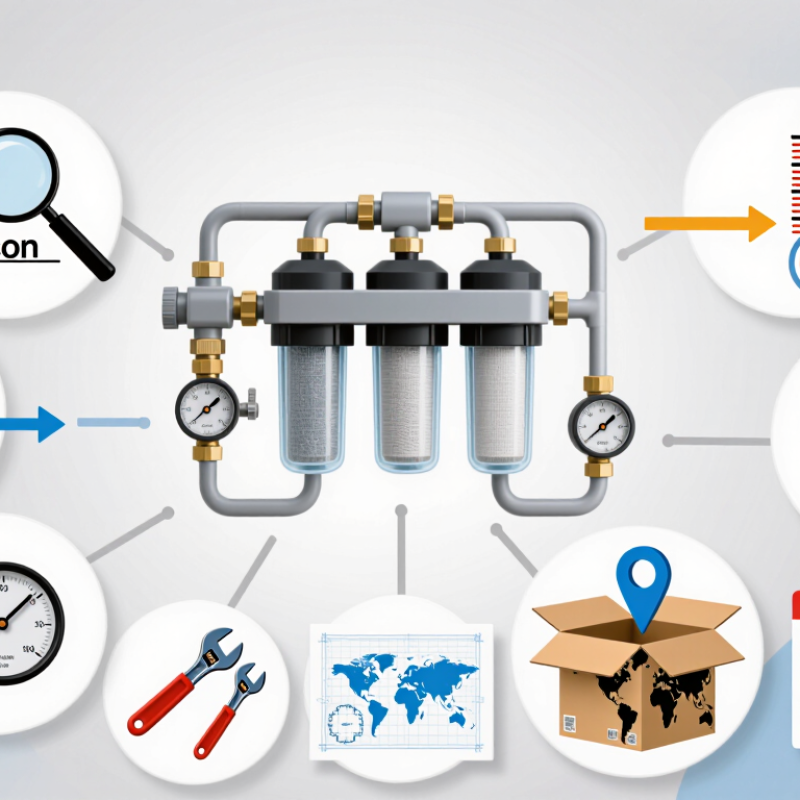
This guide presents ten practical checks for evaluating suppliers and products before purchase. Compare stated micron ratings with test conditions, and ask how flow rate was measured. Check whether wetted materials suit the process, and confirm operating pressure and temperature ranges. Request drawings, sample data, maintenance intervals, and clear guidance on spare parts. When certificates or performance reports are provided, verify their scope and issuing organization rather than relying on a logo alone.
Shipping distance, local service, language, and lead times can change the true cost of ownership. A low purchase price may hide frequent element changes or difficult installation. Not every buyer needs the most advanced unit. The right choice depends on measured conditions, not attractive claims. These tips offer a starting point, not a substitute for process testing; even careful specifications can miss an inconvenient detail. That is worth admitting.
Understanding Filter Technology and Its Role in Global Applications
Filter technology is not just a choice of mesh or cartridge. It is a way to control what passes through air or water under real operating conditions. Particle size matters, but so do flow rate, pressure drop, moisture, and maintenance access. A filter that performs well in a clean test room may clog quickly in a dusty workshop. Details matter.
The global need is substantial. The WHO/UNICEF Joint Monitoring Programme reported that 2.2 billion people lacked safely managed drinking water services in 2022. This makes filtration design relevant to municipal systems, remote facilities, and industrial reuse, though filtration alone cannot solve every water-quality problem.
For air applications, WHO’s 2021 Global Air Quality Guidelines set an annual PM2.5 guideline of 5 μg/m³. This is a health benchmark, not a filter performance rating.
Buyers should compare test methods, efficiency across particle sizes, and pressure-drop data—not rely on a single headline percentage. Ask how performance changes as media loads with dust, and how often replacement is expected.
Not always easy. Supplier data can also leave gaps, so independent testing and local operating experience deserve weight.
A specification should fit the site, not just the catalogue.
Comparing Filter Types, Media, and Separation Mechanisms
Filter choice begins with the contaminant, not the cartridge shape. A coarse screen stops larger debris at its surface, while depth media traps particles through a thicker fiber bed. Pleated media offers more surface area in a compact housing, but can still clog quickly when solids are sticky. Small details matter. Ask for particle-size and flow data, not just a micron rating.
Membranes separate by pore size, while activated carbon mainly adsorbs certain dissolved compounds. The U.S. EPA’s Membrane Filtration Guidance Manual (2005) gives typical pore-size ranges of 0.1–1 micrometer for microfiltration, 0.01–0.1 for ultrafiltration, and 0.001–0.01 for nanofiltration. These ranges help compare mechanisms; they do not guarantee removal of every contaminant. Check test conditions, feed-water chemistry, and whether the rating is nominal or absolute. A neat chart can still mislead.
For drinking-water pretreatment, turbidity is a useful operating clue. WHO’s Guidelines for Drinking-water Quality (2022) state that turbidity should generally be below 1 NTU for effective disinfection, with below 0.5 NTU ideal. That is not a universal filter specification. It is a reminder to measure performance at the outlet, too. In practice, buyers should compare clean and loaded pressure drop, service life, and replacement intervals under realistic flow. I would not choose on micron rating alone.
Evaluating Performance Specifications and Operating Conditions
A filter’s efficiency rating only matters when it matches the particles and airflow in your application. ASHRAE Standard 52.2-2017 measures particle removal across three size ranges: 0.3–1.0, 1.0–3.0, and 3.0–10.0 micrometres. ISO 16890-1:2016 classifies general ventilation filters by ePM1, ePM2.5, and ePM10 efficiency. These test methods help buyers compare performance, but their ratings are not interchangeable. Check the test standard, rated airflow, and initial pressure drop on the supplier’s data sheet. A high efficiency rating alone can mislead.
Tips: Match the test rating to the particles you need to control. Compare pressure drop at your actual design airflow. Confirm the filter’s dimensions and sealing arrangement. Ask for test conditions and supporting reports. Small details matter.
Operating conditions can change real-world results. Dust loading raises resistance, while humidity, temperature, and airflow may affect media and seals. Compare initial and final pressure-drop limits, then confirm the recommended replacement point with the manufacturer’s test data. Check whether the stated service life reflects your dust concentration; it may not reflect your site. A dusty intake beside a loading bay is not the same as a clean office system. I would not rely on a catalogue figure without checking the application. Test a sample under representative conditions when the consequences of a poor fit are significant.
Checking Compatibility, Certifications, and Regulatory Requirements
Global buyers should match a filter to the actual operating conditions, not just its frame size. Check airflow, pressure drop, temperature, humidity, and the particles or gases the system must capture. A filter that fits physically may still restrict airflow or miss the target contaminant. Ask for test results tied to the exact model and operating range. Small details matter.
For ventilation filters, compare the stated test method and classification. ISO 16890 classifies filters by particle removal, while ASHRAE Standard 52.2 assigns MERV ratings using a different method. These ratings are not directly interchangeable. WHO’s 2022 air quality database reported that 99% of the global population lived where air quality exceeded its guideline limits. That context makes verified performance claims important, though a filter rating alone cannot guarantee healthy indoor air.
For drinking-water applications, check whether certification covers the specific contaminant claim and product configuration. NSF/ANSI standards address different functions, so a general certificate may not support every reduction claim. Requirements also vary by destination and end use. Request current certificates, test reports, and installation limits; confirm them with the relevant local authority. Paperwork can look convincing. Read the scope carefully. I would also recheck compatibility after any change in flow rate or source-water quality, even when the original selection seemed sound.
Assessing Supplier Quality, Testing, and Long-Term Support
Global buyers should assess a filter supplier beyond a polished data sheet. Ask for material certificates, production controls, and traceable batch records. A sample may look sound, yet its seal can soften after repeated temperature changes. Request test reports that identify the method, conditions, and acceptance limits, not just a pass mark. Check whether results apply to the exact media, housing, and configuration you plan to order. Small details matter.
Before approving a large order, agree on a practical validation plan. Test flow rate, pressure drop, particle retention, and leakage under conditions close to your process. If your fluid or operating environment differs from the laboratory setup, ask how that gap is addressed. Independent testing can help when performance claims are critical, but the test scope must match the product. Keep a retained sample and record its batch number. It helps later.
Long-term support is part of supplier quality. Confirm response times for technical questions, spare-part availability, change notifications, and complaint investigations. Ask who will review a failure and what evidence they need, such as operating hours, pressure readings, or photos of the used element. A supplier that explains limitations clearly may be more dependable than one promising perfect results. Still, no checklist catches everything. Review the arrangement after process changes, and acknowledge when your own requirements were unclear. That is not neat, but useful.