How to Choose a Copeland Scroll Compressor

Choosing a Copeland scroll compressor begins with the system, not the catalog page. A unit that looks right on paper may struggle when outdoor temperatures rise, suction pressure shifts, or the load changes through the day. Check the refrigerant, required capacity, voltage, operating range, and control method before comparing models. Small details matter. So does the equipment around it.

Copeland’s application engineering team offers a useful selection principle: “Match the compressor to the system’s real operating conditions, not capacity alone.” This is an editorial paraphrase, not a verified quotation from a named engineer. A reliable selection also depends on manufacturer data and qualified application review. In practice, compare performance at your expected evaporating and condensing temperatures, then confirm compatibility with the existing piping, electrical supply, and protection controls. A nameplate rating is only one piece of the picture.

This guide explains how to choose a Copeland Scroll Compfressor for a specific refrigeration or air-conditioning application. It covers capacity, refrigerant compatibility, operating envelope, efficiency, and installation constraints. Bring actual design conditions, not guesses. One limitation deserves attention: real sites rarely behave like tidy specification sheets. Dust, airflow restrictions, and changing demand can alter performance. The best choice is therefore not always the largest or newest model. It is the compressor that fits the application, with its assumptions checked and documented.
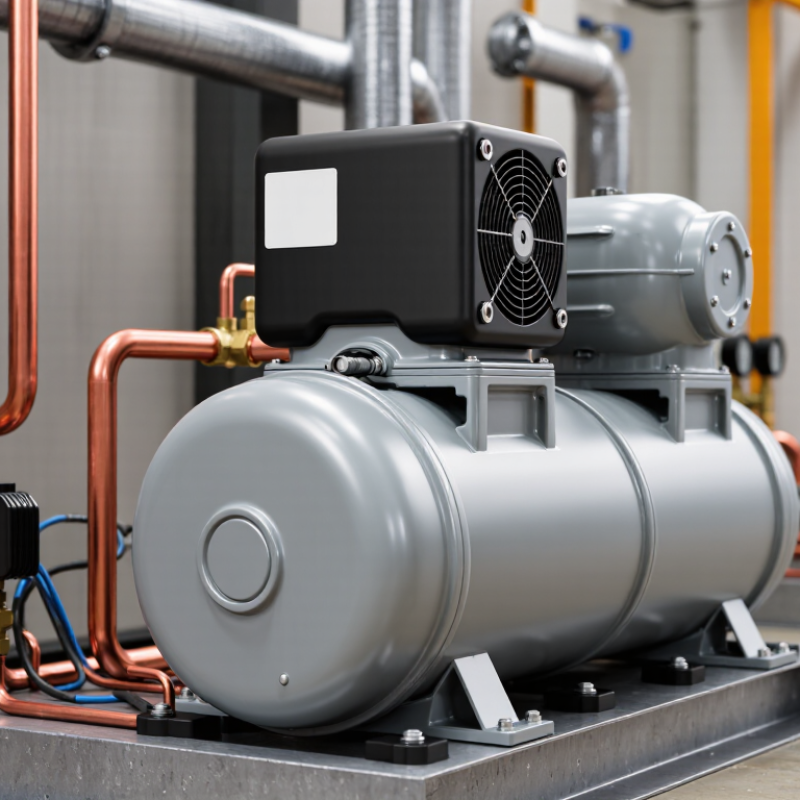
How to Choose a Copeland Scroll Compressor

Understand Copeland Scroll Compressor Types and Applications

Scroll compressors come in several configurations, and each suits a different operating pattern. Fixed-speed models run at one capacity and work well where demand stays fairly steady, such as many comfort-cooling systems. Variable-speed models adjust output to changing loads, which can reduce cycling during mild weather. Digital capacity-control designs vary delivered capacity without changing motor speed. Tandem arrangements pair compressors to meet fluctuating demand in larger systems. Not every configuration fits every refrigerant or operating range. Check the equipment data carefully.

Application matters more than the label. A walk-in cooler may need reliable operation at low evaporating temperatures, while a heat pump must handle changing outdoor conditions and heating cycles. Match the compressor to the system’s refrigerant, capacity, voltage, and rated operating envelope. Review expected load, ambient temperature, pipe layout, and sound limits, too. Small details count. A common sizing mistake is choosing capacity from peak demand alone; part-load behavior can matter just as much. Compare published performance at your actual design conditions, and confirm compatibility with the complete system before selection. A neat specification sheet cannot replace a careful review of real operating conditions.

Determine the Required Cooling or Heating Capacity

Start with a room-by-room load calculation, not the old unit’s nameplate. Include floor area, insulation, window exposure, air leakage, occupancy, lighting, and equipment heat. A west-facing room with unshaded glass can add a sharp afternoon cooling load. Local design temperatures matter; sizing from a mild-day reading can mislead. Separate sensible heat, which changes air temperature, from latent heat, which removes moisture. Damp climates may need longer, steadier operation rather than a larger capacity.

For heating, use the building’s heat loss at the local winter design temperature. In a heat-pump system, compare available heating capacity at that outdoor temperature, not only the nominal rating. Check the compressor’s published performance at the planned evaporating and condensing conditions. Capacity changes with operating conditions, refrigerant circuit design, airflow, and system controls. A unit that looks right on paper may fall short on a cold morning. Oversizing is not automatically safer; it can cause short cycles and uneven comfort.

Tips: Keep the load calculation, design temperatures, and equipment performance data together. Verify assumptions against measured airflow and site conditions where possible. Leave room for uncertainty, but do not guess upward. Window shading is easy to overlook; it deserves a second look.

Match the Compressor to the Refrigerant and Operating Conditions

A scroll compressor should be matched to the exact refrigerant and operating range, not chosen by capacity alone. Refrigerants differ in pressure behavior, mass flow, and discharge temperature. Confirm that the specific compressor model is approved for the refrigerant and lubricant in the system. A similar pressure rating is not enough. That matters.

Compare the unit’s performance data with the expected evaporating and condensing temperatures, including the hottest outdoor conditions and the lowest cooling load. Check required capacity at those points, not just at a catalog’s nominal rating. Also review the permitted operating envelope and discharge-temperature limits. Small details count. A system with high superheat or poor airflow may push the compressor beyond its intended range, even when its rated capacity looks right. Consider liquid floodback risk during startup and defrost, and verify that piping and controls support stable oil return. A spreadsheet can make the comparison tidy, but field conditions rarely are. Leave room for uncertainty, and have a qualified technician confirm selections against the full manufacturer data before installation.

Check Electrical, System, and Installation Compatibility

Before selecting a scroll compressor, compare its nameplate with the supply: voltage, phase, and frequency must match. Check rated load current, locked-rotor current, and the required overload and protection devices. A plug that fits proves little. AHRI Standard 540-2020 rates positive-displacement compressors at specified suction and discharge conditions, so compare capacity and power at matching conditions—not just headline ratings. Confirm the refrigerant, oil type, and operating envelope against the system design. A mismatch can mean poor capacity or operation outside approved limits.

Installation compatibility matters just as much. Check piping connections, mounting points, vibration isolation, service access, and airflow around the motor. Measure the available space; a cabinet that is only slightly too tight can make routine maintenance awkward. The U.S. Energy Information Administration’s 2018 Commercial Buildings Energy Consumption Survey reports that space cooling accounts for about 10% of commercial-building site energy use. That makes correct system matching consequential, though the figure does not predict savings from a compressor change. Verify expected load across seasonal conditions, and have a qualified technician confirm wiring, protection, and commissioning details. I would also recheck the original system data; old records are not always right.

Compare Efficiency Ratings and Verify Model Specifications

Efficiency ratings help narrow compressor choices, but compare them under identical test conditions. Check whether figures use the same refrigerant, evaporating temperature, condensing temperature, and frequency. A higher rating on one datasheet may reflect a different test point, not a better match for your system. Look at capacity and power input together. A compressor that uses less power but cannot meet the required cooling load is not an efficient choice in practice.

Read the model specification sheet closely. Confirm the exact model number, voltage, phase, frequency, refrigerant, cooling capacity, and permitted operating range. Check connection sizes and physical dimensions before planning the installation. Small mismatches matter. I’ve seen selection notes focus on efficiency while overlooking a voltage detail; it is an easy mistake to make. Verify that the operating envelope covers expected summer conditions and the system’s normal suction and discharge pressures. If data is missing or unclear, request the full technical sheet rather than relying on a product summary. Then compare candidate models in a table, using the same conditions for every figure. Ratings can guide the decision, but the specifications decide whether the compressor actually fits.

How to Choose a Copeland Scroll Compressor - Compare Efficiency Ratings and Verify Model Specifications

Comparison dimension What to compare How to verify or interpret it
Cooling or heating capacity Rated capacity at the required evaporating and condensing conditions. Compare capacity at the same refrigerant, rating standard, and operating conditions. Do not compare nominal capacity alone.
Input power Compressor electrical input at the stated rating point. Use the same rating conditions as the capacity figures. Lower input power is not necessarily better if the unit also delivers less capacity.
COP and EER COP is capacity divided by input power when both are expressed in the same power units. EER is cooling capacity in Btu/h divided by electrical input in watts. For the same rating point, EER ≈ COP × 3.412. Compare figures only when test conditions and system boundaries match.
Rating standard and test conditions The cited test standard, evaporating and condensing temperatures, superheat, subcooling, and frequency. Check the published performance table or selection software. Ratings from different conditions are not directly comparable; compressor performance data may be reported under AHRI 540.
Refrigerant compatibility Approved refrigerant and any associated oil or system requirements. Verify the exact refrigerant against the compressor’s model-specific documentation. Do not assume compatibility based on similar capacity or appearance.
Operating envelope Permitted suction and discharge conditions, temperature limits, and application range. Confirm that the full expected operating range falls within the model-specific envelope, including startup and worst-case ambient conditions.
Electrical requirements Rated voltage, phase, frequency, maximum current, and starting requirements. Match the nameplate and technical data to the available supply and the system’s electrical protection and controls.
Capacity control Fixed-speed or variable-speed operation and the permitted control method. Verify that the compressor, drive, and system controller are approved to operate together across the intended load range.
Physical fit and connections Overall dimensions, mounting pattern, connection type and size, and service clearance. Check the model drawing and installation instructions before ordering; similar capacity does not guarantee interchangeable dimensions or connections.
Documentation and model identity Complete model number, revision, performance data, wiring diagram, and installation manual. Confirm every specification against documentation for the exact model and revision, rather than relying on a shortened listing or a similar model number.

Selection note: A fair efficiency comparison requires the same refrigerant, rating conditions, and system boundaries. Seasonal system ratings and single-point compressor ratings should not be treated as equivalent.