

How to Choose the Right Pipe Elbow for Your Project?
Choosing the right Pipe Elbow affects flow, pressure loss, weld quality, and long-term maintenance. It is not a small purchasing decision. A 90-degree elbow may look simple on a drawing, yet its radius, wall thickness, material, and connection type can change system performance.
Piping authority Mohinder L. Nayyar offers a useful principle: “A fitting belongs to the piping system, not to the shopping list.” That idea deserves attention. Engineers should review operating pressure, temperature, fluid composition, pipe schedule, and installation space together. A tight-radius elbow may save room near a pump, but it can create higher turbulence and energy loss. A long-radius design usually supports smoother flow. Not always. Actual conditions matter.
This guide explains how to compare carbon steel, stainless steel, alloy, and plastic elbows. It also considers butt-weld, socket-weld, threaded, and flanged connections. Standards such as ASME B16.9 and ASME B16.28 can help verify dimensions and manufacturing requirements. However, compliance alone does not guarantee a suitable choice. Corrosive fluid, repeated vibration, thermal expansion, or limited access may expose weaknesses later.
Look closely at the details. A mismatched schedule can complicate welding. A poor material choice can shorten service life. One overlooked measurement can delay installation. That happens.
The best selection balances safety, flow efficiency, cost, availability, and future inspection. This article provides a practical framework for choosing a Pipe Elbow with greater confidence, while leaving room for professional review when project conditions remain uncertain.
What Is a Pipe Elbow and Why Does It Matter?
How to Choose the Right Pipe Elbow for Your Project?
What Is a Pipe Elbow and Why Does It Matter?
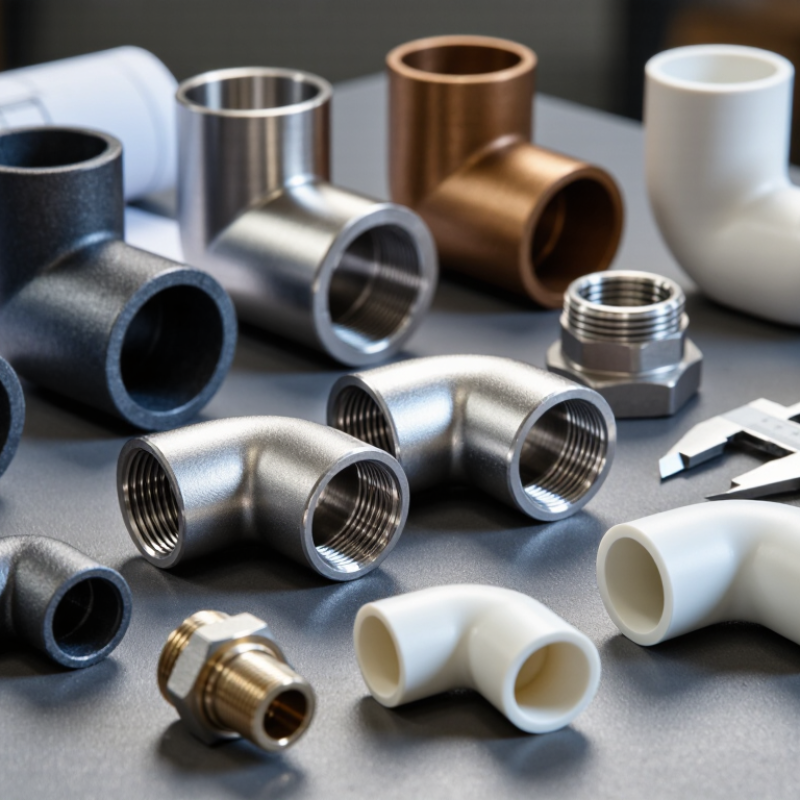
A pipe elbow is a curved fitting that changes a pipeline’s direction. Common angles include 45 and 90 degrees. Some systems require tighter or wider turns. The elbow keeps connected pipes aligned while controlling flow through the system. Without the correct fitting, sharp changes can increase turbulence, vibration, and pressure loss. Small details matter here.
Selection begins with the service conditions. Check the pipe size, material, pressure rating, temperature, and connection type. A stainless steel elbow may suit corrosive water, while carbon steel can serve many industrial applications. Threaded, socket-weld, and butt-weld connections are not interchangeable. Always compare the fitting with the pipe specification and applicable standards, such as ASME B16.9 for certain welded fittings.
Look closely at the bend radius. A long-radius elbow usually creates smoother flow and lower resistance. A short-radius elbow saves space but may increase turbulence. Inspect the fitting before installation. Look for dents, damaged threads, uneven ends, or visible corrosion. A practical mistake is choosing by diameter alone. I have seen layouts fail because the pressure class was ignored. The elbow fit perfectly, but the system did not. Installation drawings and pressure calculations deserve another review. Safety depends on that extra minute.
How to Choose the Right Pipe Elbow for Your Project?
What Is a Pipe Elbow and Why Does It Matter?
| Selection Dimension | Common Options | Key Data or Specification | Best-Suited Application | Important Selection Consideration |
|---|---|---|---|---|
| Elbow Angle | 45°, 90°, and 180° | 45° changes flow direction by 45°; 90° creates a quarter-turn; 180° reverses the flow direction. | Use 45° elbows for gradual directional changes, 90° elbows for standard turns, and 180° elbows for return layouts. | A larger change in direction generally creates more turbulence and pressure loss than a smaller change. |
| Centerline Radius | Long-radius (LR) and short-radius (SR) | Long-radius elbows commonly have a centerline radius of 1.5 × the nominal pipe size; short-radius elbows commonly have a radius of 1.0 × the nominal pipe size. | Long-radius elbows are preferred for lower pressure loss and smoother flow; short-radius elbows are useful where installation space is limited. | Confirm the required center-to-end dimensions against the applicable dimensional standard before ordering. |
| Nominal Pipe Size | NPS 1/2 through large-diameter sizes | Elbow end dimensions must match the nominal pipe size and wall thickness of the connecting pipe. | Any piping system requiring a change in direction. | Nominal size is not always the actual outside diameter. Check the pipe schedule and outside diameter for compatibility. |
| Wall Thickness and Schedule | Schedule 10, 40, 80, 160, and other wall classes | The elbow wall thickness should be compatible with the connected pipe, design pressure, temperature, and corrosion allowance. | Process piping, utility lines, steam systems, and pressure piping. | Do not select an elbow by nominal size alone; mismatched wall thickness can create welding, alignment, or pressure-design problems. |
| Connection Method | Butt weld, socket weld, threaded, flanged, and grooved | Butt-weld elbows are commonly used for permanent welded systems; socket-weld and threaded elbows are common in smaller-bore piping; flanged and grooved connections support easier assembly or maintenance. | Choose based on pipe size, pressure class, maintenance requirements, installation access, and local piping practice. | The elbow connection type must match the pipe ends, joining procedure, fitting standard, and required inspection method. |
| Material Selection | Carbon steel, stainless steel, alloy steel, copper alloys, and non-metallic materials | Material selection depends on fluid chemistry, operating temperature, pressure, corrosion risk, and mechanical requirements. | Carbon steel is common for general industrial service; stainless steel is used where corrosion resistance or hygiene is important; alloy materials suit elevated-temperature or specialized service. | Verify chemical compatibility, galvanic-corrosion risk, temperature limits, and the material certificate requirements. |
| Pressure and Temperature Rating | Determined by material, wall thickness, size, design code, and connection class | Butt-weld fittings are typically designed according to the pressure-temperature requirements of the applicable piping code and fitting standard. Threaded and socket-weld fittings may use pressure classes such as Class 2000, 3000, or 6000, depending on the standard and material. | High-pressure, high-temperature, steam, hydraulic, and process applications. | Use the rating at the actual operating temperature, not only the room-temperature rating. The system rating is limited by its weakest component. |
| Applicable Dimensional Standard | ASME B16.9, ASME B16.11, EN, ISO, or project-specific standards | ASME B16.9 covers factory-made wrought butt-welding fittings; ASME B16.11 covers forged socket-welding and threaded fittings. | Industrial piping systems requiring standardized dimensions and documented compliance. | Do not mix standards without confirming end-to-end dimensions, wall thickness, tolerances, pressure class, and inspection requirements. |
| Flow and Pressure Loss | Short-radius, long-radius, and segmented configurations | Pressure loss depends on elbow angle, radius, internal surface, flow velocity, fluid properties, and pipe size. Long-radius elbows generally produce less loss than short-radius elbows of the same nominal size. | Pumping systems, compressed-air lines, water systems, and high-flow process piping. | For critical flow systems, calculate equivalent length or use the appropriate resistance coefficient rather than relying only on a general rule. |
| Manufacturing Configuration | Seamless, welded, forged, or fabricated | Manufacturing method affects available sizes, wall thickness, inspection requirements, surface condition, and cost. | Seamless or forged fittings are often selected for demanding pressure service; welded or fabricated elbows may suit large-diameter or custom layouts. | Confirm whether the project requires heat treatment, radiographic examination, ultrasonic testing, or other quality controls. |
| Installation Space | Compact short-radius or extended long-radius layout | Short-radius elbows occupy less center-to-end distance, while long-radius elbows require more space but usually provide a smoother flow path. | Compact equipment skids, plant piping, building services, and congested pipe racks. | Check the elbow’s center-to-end dimensions, pipe supports, insulation clearance, and access for welding or maintenance. |
| Inspection and Compliance | Visual inspection, dimensional inspection, material verification, and non-destructive examination | Requirements vary by piping code, service category, material, project specification, and safety classification. | Pressure equipment, hazardous-fluid systems, power facilities, and regulated installations. | Review the material certificate, marking, heat number, dimensions, test records, and required inspection documentation before installation. |
Note: The values shown are common industry practices and reference dimensions. Final elbow selection must be verified against the applicable design code, pressure-temperature rating, material specification, pipe schedule, fluid service, and project requirements.