What is a Tangential Flow Filtration System and Its Benefits?
The tangential flow filtration system (TFF) has gained significant traction in bioprocessing. According to a report from Grand View Research, the global market for TFF is projected to reach $2.76 billion by 2025. This system offers a way to separate and concentrate biopharmaceutical products efficiently.
Dr. Emily Carter, a leading expert in bioprocess engineering, states, "TFF systems allow for enhanced product yield and reduced processing times." This technology enables the filtration of larger volumes while minimizing fouling, which is essential for large-scale applications.
Despite its advantages, implementing a tangential flow filtration system requires careful consideration. Operators must manage factors like pressure and temperature, which can impact efficiency. Understanding these variables is crucial for optimizing performance and achieving desired outcomes in the filtration process.
Definition and Overview of Tangential Flow Filtration System
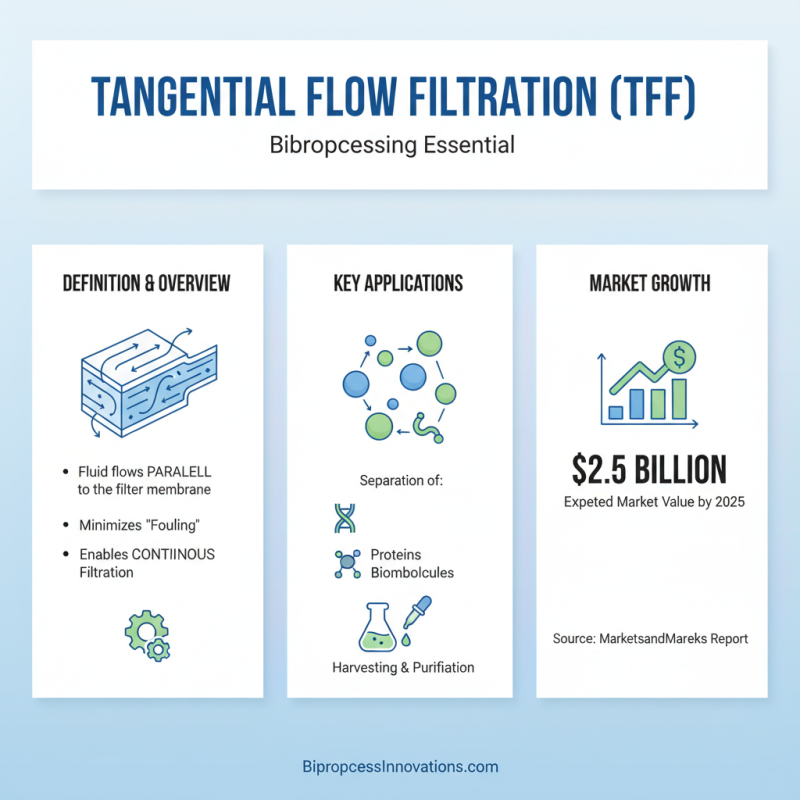
Tangential Flow Filtration (TFF) is a specialized filtration technique widely used in bioprocessing. It operates by flowing a fluid parallel to the filter membrane. This design minimizes fouling, allowing for continuous filtration. As a result, TFF proves essential in separating proteins and other biomolecules. According to a report from MarketsandMarkets, the TFF market is expected to reach $2.5 billion by 2025, highlighting its growing significance.
One of the primary benefits of TFF is its efficiency in large-scale applications. It can concentrate and purify substances in a matter of hours. The cross-flow dynamics reduce the risk of clogging, which is a common issue in traditional filtration methods. Laboratories often report a reduction of operating time by up to 50%. However, challenges remain, such as membrane selection and cost control. Some users struggle with the initial investment in TFF systems.
Despite these challenges, TFF systems offer impressive scalability. They can accommodate variable flow rates, making them versatile for different production scales. Recent studies show that employing TFF can lead to greater yield with fewer processing steps. This reflects how the right filtration system can streamline workflows. As the industry evolves, continuous innovation in membrane technology will further enhance TFF's applications.
Principle of Operation in Tangential Flow Filtration
Tangential Flow Filtration (TFF) is a method that utilizes a specialized setup to separate particles and molecules in a fluid. The principle of operation is quite fascinating. In TFF, the feed stream flows parallel to the filter membrane. This flow creates a unique shear force that helps keep the membrane surface clean. As a result, it reduces the chance of clogging, or fouling, that often occurs in conventional filtration methods.
This technique allows for continuous processing. It facilitates the separation of desired substances without needing to stop for cleaning. The design of TFF systems often enhances the efficiency of separations. However, there can be challenges in optimizing flow rates. Achieving the right balance between permeate flow and retentate concentration is key. Miscalculating flow rates can lead to suboptimal results.
In practice, operating a TFF system requires careful monitoring and adjustments. Operators must ensure that the pressure remains consistent. This is critical for maintaining performance. If not managed properly, the system might experience decreased efficiency over time. The benefits of TFF are clear, but the operation demands precision and attention to detail.
Key Components of a Tangential Flow Filtration System
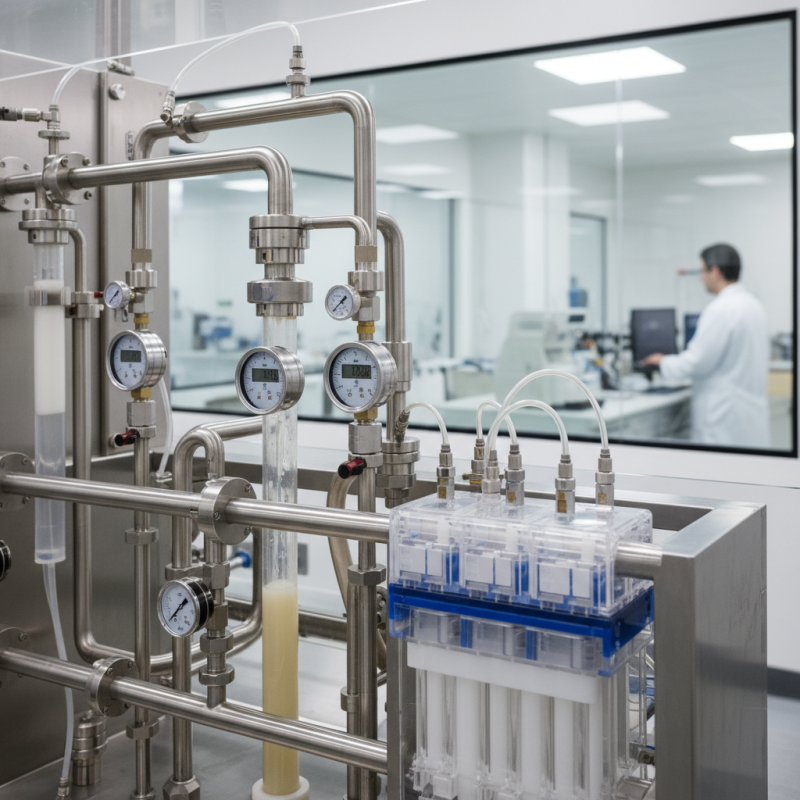
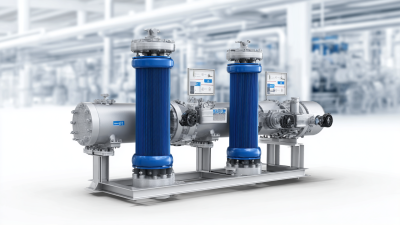
A Tangential Flow Filtration (TFF) system is an advanced technology frequently used in bioprocessing and biotechnology applications. Its primary function is to separate components in a solution based on size. The system uses a membrane with specific pore sizes to achieve this separation. This allows for efficient removal of impurities while retaining larger molecules, such as proteins or cells.
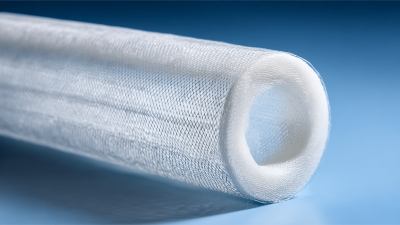
Key components play a crucial role in the effectiveness of a TFF system. The membrane is the heart of the system. It determines the filtration performance and selectivity. Various materials are used for different applications, influencing flow rates and fouling resistance. The pump is another essential part; it maintains a consistent flow rate. This helps to ensure that the filtration process remains stable and effective. Additionally, a pressure control system is necessary to monitor and adjust the operating conditions. This minimizes the risk of membrane damage or process failure.
One often overlooked aspect is the influence of temperature on filtration. Higher temperatures can enhance flow rates, but they may also affect protein stability. It’s important to find the right balance. Regular maintenance of the system is essential. Clogged membranes can lead to inefficiencies. Analyzing and optimizing process parameters can make a significant difference in the performance and longevity of the TFF system.
Tangential Flow Filtration System - Component Efficiency
This chart illustrates the key performance metrics of a Tangential Flow Filtration System, focusing on the membrane area, feed flow rate, permeate flow rate, and retentate rate, highlighting their roles in operational efficiency.
Advantages of Using Tangential Flow Filtration in Various Applications
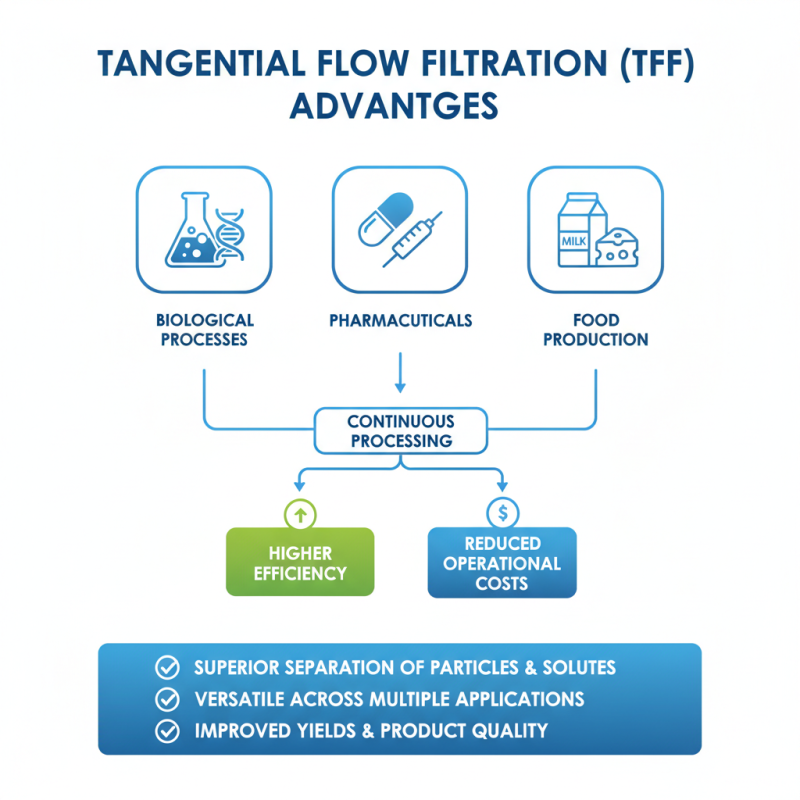
Tangential flow filtration (TFF) is widely used in various industries. This technique provides several advantages across multiple applications. It effectively separates particles and solutes in biological processes, pharmaceuticals, and food production. Unlike traditional filtration methods, TFF allows for continuous processing. This feature leads to higher efficiency and reduced operational costs.
One significant benefit of TFF is its ability to concentrate valuable components. For instance, in biopharmaceuticals, TFF efficiently concentrates proteins while removing impurities. This results in a more streamlined purification process. TFF also minimizes clogging and membrane fouling. This advantage enhances system longevity and decreases downtime.
In food processing, TFF is used to clarify juices and wines. It ensures consistency in product quality. However, the initial investment for a TFF system might be high. Users must carefully consider their needs and potential return on investment. Overall, the advantages of tangential flow filtration make it a compelling choice for industries seeking efficiency and efficacy.
Common Applications and Industries Utilizing Tangential Flow Filtration
Tangential Flow Filtration (TFF) systems are widely used across various industries. They excel in bioprocessing, particularly in the pharmaceutical sector. This system offers an efficient way to separate cells and proteins from liquids. Researchers appreciate TFF’s ability to concentrate products effectively, saving both time and resources. The design minimizes clogging and maximizes yields, which is crucial in high-stakes environments like drug production.
In the food and beverage industry, TFF plays a key role in clarifying liquids. It helps in reducing the overall processing time while preserving product quality. Juice manufacturers use TFF to remove pulp and clarify their products. In biotechnology, TFF is used in the production of monoclonal antibodies. Here, maintaining product integrity during filtration processes is paramount. Companies in these sectors value TFF for its reliability and efficiency. However, the initial investment can be a concern for smaller enterprises. They must weigh its long-term benefits against upfront costs.
Despite its advantages, TFF is not without challenges. Users may encounter membrane fouling over time. This can affect filtration performance and requires maintenance. Continuous refinement and monitoring of processes remain essential for optimal results. Embracing TFF involves a balance of benefits and ongoing vigilance in system management.
What is a Tangential Flow Filtration System and Its Benefits? - Common Applications and Industries Utilizing Tangential Flow Filtration
| Application |
Industry |
Benefits |
| Biopharmaceutical Purification |
Pharmaceutical |
High yield, scalability, reduced processing time |
| Microbial Fermentation |
Biotechnology |
Efficient separation, minimal clogging, high product recovery |
| Water Purification |
Environmental |
Improved water quality, cost-effective, low waste generation |
| Vaccine Production |
Healthcare |
Increased throughput, higher purity levels, adjustable scaling |
| Food & Beverage Filtration |
Food Industry |
Extended shelf life, removal of spoilage organisms, clarity enhancement |