

China Top 10 Asphalt Storage Tank Manufacturers

Choosing an Asphalt Storage Tank manufacturer in China involves more than comparing quoted prices. Asphalt must remain within a workable temperature range during storage, transfer, and loading. Tank design, insulation quality, heating arrangements, and access for maintenance all affect daily operation. Small details matter.

This guide introduces ten Chinese manufacturers and offers a practical starting point for comparing their capabilities. It considers product range, fabrication experience, customization options, documentation, and after-sales support. Buyers should also examine tank capacity, material specifications, heating methods, and corrosion protection against their own project requirements. A polished catalog is useful, but it cannot replace clear drawings and direct technical answers.

There is no universal best supplier. A plant near a busy port may need different features from a remote road-construction site. Lead times, installation support, spare-parts access, and communication can matter as much as the tank itself. Ask for relevant project references and confirm what each quotation includes. This list is a guide, not a guarantee; company capabilities and project fit can change. Some comparisons may also be imperfect, because public information does not always show how equipment performs after years of use. That is worth remembering. Use the profiles to narrow your options, then verify specifications and service commitments with each manufacturer before making a decision.
China Top 10 Asphalt Storage Tank Manufacturers

China’s Asphalt Storage Tank Industry: Market and Manufacturing Overview

China’s asphalt storage tank industry is shaped by road construction, maintenance cycles, and the location of asphalt mixing plants. The Ministry of Transport’s 2023 Statistical Bulletin reports 5.436 million kilometres of highways and 183,800 kilometres of expressways across China. These figures indicate a substantial road network, but they do not directly measure tank demand. The gap is real. Project timing, existing storage capacity, and distance from asphalt suppliers all influence purchasing decisions.

Manufacturers therefore need to match tank capacity and heating systems to local operating conditions. Insulation helps limit heat loss during storage, while temperature controls support consistent material handling. Buyers also assess steel quality, weld inspection, corrosion protection, and maintenance access. Small details matter: a poorly positioned access hatch can make routine cleaning harder. Regional demand can vary, too; plants serving seasonal projects may need different storage arrangements from those supplying steady urban roadwork. The transport bulletin offers useful infrastructure context, but tank-market estimates should be treated carefully unless supported by transparent shipment or production data.

Types of Asphalt Storage Tanks and Their Industrial Applications

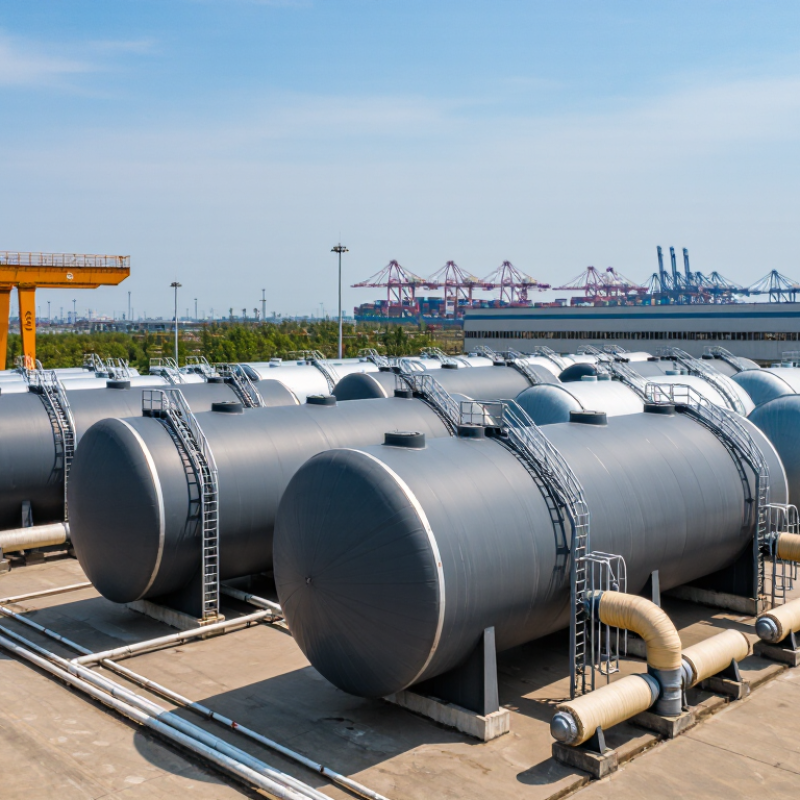
Asphalt storage tanks are chosen by capacity, site layout, and heating needs. Vertical tanks save ground space at terminals and large plants. Horizontal tanks suit compact sites and temporary paving operations. Insulated tanks with indirect thermal-oil heating help maintain an even temperature and limit localized overheating. NAPA’s 2023 Asphalt Pavement Industry Survey estimated U.S. asphalt-mixture production at about 420 million tons in 2022. That volume makes dependable buffer storage important. The trade-off is real.

At asphalt mixing plants, heated tanks hold binder close to production lines, reducing delays when trucks arrive. Road contractors may use smaller horizontal tanks to supply paving crews. Terminals need larger-capacity tanks for receiving, blending, and dispatching binder.

Roofing-material and emulsion facilities also use storage tanks, though their required temperatures and handling systems differ. Operators should match tank design to the binder grade, expected turnover, and heating controls.

A tank alone cannot correct poor temperature management. Tank selection seems straightforward on paper; in practice, site access and maintenance can change the answer.

Criteria for Evaluating Chinese Asphalt Tank Manufacturers

When comparing Chinese asphalt tank manufacturers, begin with the actual operating conditions. Check the proposed capacity, asphalt temperature range, heating method, insulation thickness, and site layout. Ask for engineering drawings that show access points, drain locations, and maintenance clearances. Small details matter. A tank that fits on paper may be awkward to service once pipes and walkways are installed.

Review how the manufacturer controls fabrication quality. Request material records, weld inspection procedures, and details of how insulation and protective coatings are applied. For heated tanks, examine sensor placement and temperature-control arrangements; uneven heating can affect stored asphalt and increase energy use. Ask what is tested before shipment, and whether inspection records can be provided. A polished brochure is not proof. Evidence is better.

Service capability deserves the same attention as the tank itself. Confirm the scope of installation support, availability of replacement parts, and response arrangements for technical questions. Ask for references from projects with similar capacity and operating conditions, then verify what you can. Check certificates against the specific product and work involved. Compare lifetime maintenance and energy needs, not just the purchase price. Even a careful checklist has limits: local weather, foundations, and operating habits can change performance. Some answers may remain uncertain.

Profiles of 10 Leading Asphalt Storage Tank Manufacturers in China

China’s asphalt storage tank manufacturers vary in design focus, heating methods, and project support. These ten profiles describe distinct supplier strengths, not a verified ranking. A fabrication-focused producer may offer welded tanks with reinforced supports for demanding site conditions. Another specializes in insulated vessels, where insulation quality helps limit heat loss during storage. Some suppliers build large-capacity tanks for high-volume asphalt operations. Others concentrate on compact, modular designs that simplify transport and installation.

A heating-system specialist may integrate thermal-oil coils and temperature controls, while a controls-focused manufacturer emphasizes monitoring and operator access. One supplier may tailor tank layouts to existing plant space; another may provide complete systems with pumps and connecting pipework. Export-oriented manufacturers often support equipment documentation and shipment planning. A mobile-equipment producer may suit temporary or changing worksites. A final profile might focus on maintenance access, such as reachable valves and cleanout openings. Details matter. Buyers should check material specifications, insulation thickness, heating capacity, and fabrication records. A polished brochure is not proof of performance. Site conditions and service availability can also change the best choice, and that part is easy to underestimate.

China Top 10 Asphalt Storage Tank Manufacturers - Profiles of 10 Leading Asphalt Storage Tank Manufacturers in China

Note: The profiles below summarize common asphalt-storage equipment capabilities and are not verified profiles or rankings of specific companies. Product specifications vary by project and supplier.

Profile Typical Tank Configuration Common Heating Approach Insulation and Cladding Common Application Key Specification to Confirm
Profile 1 Fixed vertical tank Thermal-oil heating coils Mineral-wool insulation with metal cladding Asphalt plants with steady storage demand Working volume, heating duty, and temperature-control method
Profile 2 Horizontal cylindrical tank Thermal-oil heating circuit Insulated shell with weather-resistant outer covering Sites with limited vertical clearance Foundation loads, access clearances, and connection locations
Profile 3 Modular or sectional tank assembly Thermal-oil heating, configured to the installation Insulation specified for site conditions Projects with transport or access constraints Assembly method, sealing details, and on-site installation scope
Profile 4 Tank integrated with an asphalt-plant layout Thermal-oil system coordinated with plant equipment Insulated tank with plant-specific piping arrangement New or upgraded asphalt mixing plants Interface points, flow requirements, and control-system compatibility
Profile 5 Tank with multiple storage compartments Separate or coordinated heating circuits, as designed Insulation arranged for each compartment Operations storing different asphalt grades or batches Compartment capacity, isolation, and cross-contamination controls
Profile 6 Tank with recirculation connections Thermal-oil coils with provision for product circulation Insulated shell and covered process connections Storage systems requiring managed product movement Pump arrangement, nozzle sizing, and circulation requirements
Profile 7 Tank designed for outdoor installation Heating system selected for local climate and duty Insulation and cladding selected for weather exposure Permanent production facilities Ambient design conditions, corrosion protection, and drainage
Profile 8 Transportable tank package Heating provision specified for the package configuration Insulation options depend on transport and operating needs Temporary or relocatable work sites Transport dimensions, lifting points, and applicable local requirements
Profile 9 Tank with automated monitoring provisions Heating controls with temperature-sensor inputs Insulated tank with instrument access points Facilities seeking centralized process monitoring Sensor type, alarm functions, and control-system interfaces
Profile 10 Custom-engineered storage tank Heating method selected for the specified process and site Insulation package defined by design requirements Projects with non-standard capacity or layout needs Design codes, material certificates, inspection, and acceptance criteria

Comparing Manufacturers: Products, Customization, and Service Capabilities

When comparing China’s top asphalt storage tank manufacturers, look beyond advertised capacity. A 50-ton tank may suit a compact plant, while a road project may need several larger units. Check insulation thickness, heating method, steel specifications, and access points. Ask for drawings that show ladders, inspection openings, and pipe connections. Details matter.

Customization can make daily operation easier. A manufacturer may adjust tank dimensions, heating coils, control panels, and discharge arrangements to match the site. Share the asphalt grade, expected operating temperature, loading schedule, and available space before requesting a quotation. Then compare what each proposal actually includes. A low price can hide missing instruments or installation work. It happens.

Service capability is just as important as the tank itself. Ask how technical questions are handled, whether commissioning guidance is available, and how quickly replacement parts can be supplied. Request a clear maintenance schedule and sample inspection records. If possible, review project references with similar climates and production demands. A polished brochure is not proof of reliable support. Even a strong supplier may leave gaps in the first proposal, so clarify responsibilities, delivery scope, and warranty terms in writing before placing an order.