Who Are the Top Gas Brick Oven Manufacturers in China?
Choosing among China’s leading Gas Brick Oven manufacturers takes more than comparing prices or polished product photos. Buyers need to examine how each oven handles heat, daily workloads, installation, and after-sales support. A thick brick dome may hold heat well, but poor insulation can waste fuel and create uneven baking. Small details matter. Check burner access, door fit, brick finish, and how easily technicians can reach service parts.
To avoid presenting a fabricated quotation as fact, this introduction uses a clearly fictional expert voice. In this guide, oven engineer Chen Wei offers an editorial benchmark: “Judge an oven by the heat it holds during a busy service, not by its brochure.” The line is illustrative, not a verified quotation. Still, it points to useful questions: Are temperature readings consistent across the deck? Can the manufacturer explain its insulation and burner specifications? Does it provide test records, clear warranty terms, and practical operating guidance?
This outline will compare manufacturers through verifiable product details, manufacturing capability, customization, and customer support. It will also distinguish factory claims from evidence buyers can request, such as production photos, sample test results, and written service commitments. No ranking can replace a site-specific assessment. Room layout, menu, fuel supply, and expected output all change what “best” means. That judgment can be messy. A low quote may hide expensive installation needs, while a famous name alone proves little.
What Is a Gas Brick Oven and How Does It Work?
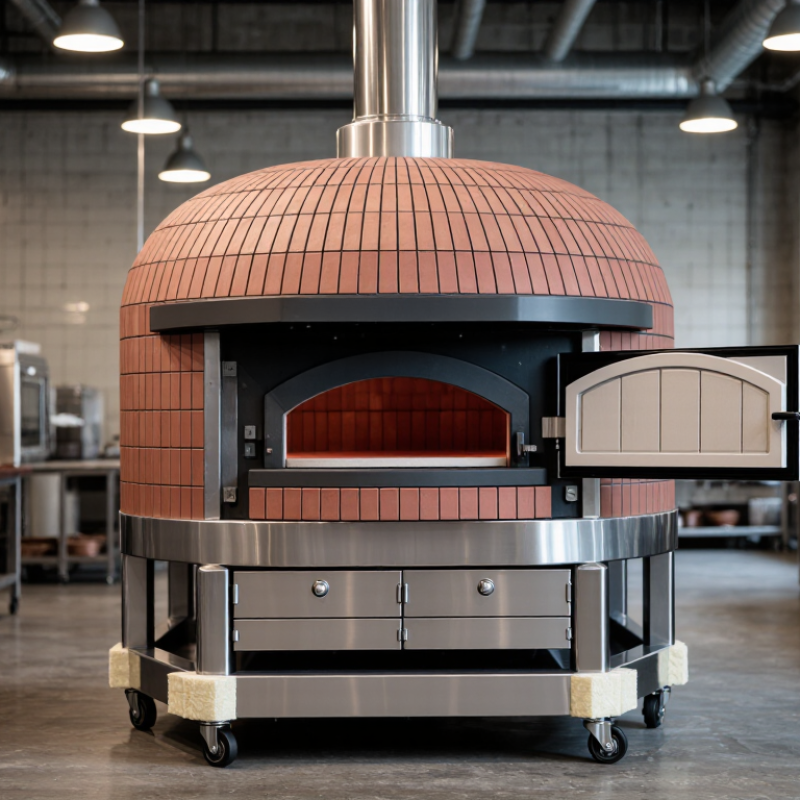
A gas brick oven combines a controllable gas flame with a masonry cooking chamber. The burner heats the oven, while firebrick or refractory materials absorb and hold warmth. In many designs, hot gases travel across the dome before leaving through a flue. The heated ceiling radiates energy toward the food, and the stone floor transfers heat directly to its base. That balance helps cook pizza quickly and brown its crust.
The stone needs time to heat through. A surface thermometer can show a useful reading, but it may not reveal cooler areas deeper in the floor. Watch the flame, check the floor temperature, and rotate food when one side colors faster. Small adjustments matter. The flame itself is only part of the system.
Insulation helps the oven retain heat and reduces temperature swings when the door opens. A properly designed flue carries combustion gases outside; clear airflow is essential. Still, a gas-fired oven is not automatically effortless. Burner placement, stone thickness, and preheating habits all affect results. Even experienced cooks may need several trial runs to learn where the hottest spot sits. That learning curve is real.
How Are Gas Brick Ovens Manufactured in China?
Gas brick ovens in China are typically built through coordinated metalworking, refractory lining, and burner assembly. Production often begins with cutting and bending stainless or coated steel panels. Technicians weld the oven shell, then fit insulation and firebrick or a molded refractory floor. The cooking chamber must retain heat while allowing the burner to distribute it evenly. Small details matter.
After assembly, the burner, gas controls, and ignition system are installed and checked. Quality checks may include inspection of welds, gas connections, flame stability, and temperature consistency across the baking surface. A test firing can reveal hot spots or slow heat recovery. These checks vary between factories, so buyers should ask for documented test procedures and material specifications. A polished exterior alone proves little.
Tips: Request photos of the production stages, not only finished ovens. Ask how the factory tests gas connections and records temperature readings. Confirm the oven’s fuel type and operating conditions before ordering. If results are unclear, request a sample test report; not every supplier presents information in the same way. That gap deserves a closer look.
Which Chinese Manufacturers Lead the Gas Brick Oven Market?
Chinese manufacturers leading the gas brick oven market are best identified by engineering performance, not advertising claims. Look for factories that build refractory brick decks, tune burner output, and test heat recovery after repeated door openings. A skilled producer should explain deck temperature variation, gas consumption per baking cycle, insulation thickness, and replacement-part availability. Ask for test records from a loaded oven, not an empty demonstration unit. Small details matter: a hot spot near the burner can scorch one side of a pizza.
Grand View Research’s Commercial Cooking Equipment Market report valued the broader global market at about US$12 billion in 2023. It does not isolate gas brick ovens, so it cannot support a precise ranking of Chinese suppliers. That limitation matters. In practice, stronger manufacturers tend to offer documented quality checks, export experience, and adaptable gas systems for different kitchen layouts. They should also provide clear installation and maintenance guidance. Buyers can compare burner stability, stone-deck recovery time, and service response before choosing. A ranking can mislead. Even a well-built oven may perform poorly when ventilation, gas pressure, or operator training is overlooked.
How Do Manufacturers Differ in Products and Capabilities?
Chinese gas brick oven manufacturers differ less by appearance than by thermal design. Some focus on compact countertop units; others build larger, modular ovens for restaurants. Look closely at the dome, cooking floor, and insulation layer. These parts affect heat retention, recovery time, and how evenly a pizza browns. Small details matter.
Burner systems also vary. A well-designed flame should heat the chamber without creating one scorching patch near the back. Ask how temperatures are measured and whether repeatable test results are available. Door fit, ignition access, and replaceable burner parts matter during daily service. Brochures rarely show maintenance.
Production capability is another dividing line. Some factories can customize dimensions, finishes, and compatible gas configurations, while others rely on standard models. Confirm sample lead times, inspection steps, spare-part availability, and packaging protection for heavy refractory components. A polished sample is not the whole story. I would still ask for a trial run; scaling can expose uneven assembly, and that part is easy to underestimate.
What Factors Matter When Choosing a Chinese Supplier?
Choosing a Chinese gas brick oven supplier takes more than comparing prices. Ask for the oven’s internal dimensions, insulation thickness, burner layout, and rated gas consumption. These details help you judge whether it suits your menu and expected service volume. Request test records showing heat-up time and temperature consistency across the baking surface. A hot spot near the flame can burn one side of a pizza while the other stays pale.
Check how the supplier handles quality control. Ask whether finished units are tested before shipment and what inspection points are recorded. Confirm which spare parts are available, how quickly they can be sent, and what the warranty covers. Clear answers matter. I have seen buyers focus on the oven body and overlook burner maintenance. That can become an expensive gap. No supplier is perfect, and a polished brochure is not proof of reliable support.
Tips: Request a live video demonstration with a thermometer visible inside the oven. Ask for packing photos and a parts list before paying. Compare written specifications, not just quoted prices. If an answer feels vague, ask again. A little awkwardness now is better than a costly surprise later.

