Top 10 Hydraulic Coupler Manufacturers for Global Buyers
Hydraulic Couplers may be small, but their performance shapes uptime, safety, and maintenance costs across mobile and industrial equipment. A leaking connection can leave oil on a workshop floor; a poorly matched coupling can slow a field repair. Buyers therefore need more than a low unit price. They need verified pressure ratings, compatible materials, reliable sealing, and clear technical documentation.
The market context is significant. Grand View Research’s Hydraulic Hose Market report estimates continued growth in this adjacent fluid-power segment, projecting a 4.4% compound annual growth rate from 2023 to 2030. Hose and coupling markets are not identical, but the trend reflects sustained demand for hydraulic equipment and replacement components. John Watton, author of Fundamentals of Fluid Power Control, emphasizes a related engineering principle: components should be assessed as part of the complete system, not in isolation. For couplers, that means checking working pressure, flow requirements, fluid compatibility, connection cycles, and contamination control.
This Top 10 guide compares manufacturers through practical buyer criteria: product range, documented performance, customization, service support, and global availability. Rankings can simplify a complicated decision. They can also hide important differences between brands and applications. A coupling suited to an excavator may not fit a food-processing line or a factory test bench. Treat each shortlist as a starting point, then verify specifications against the actual circuit and operating conditions. Small detail. Big consequences.
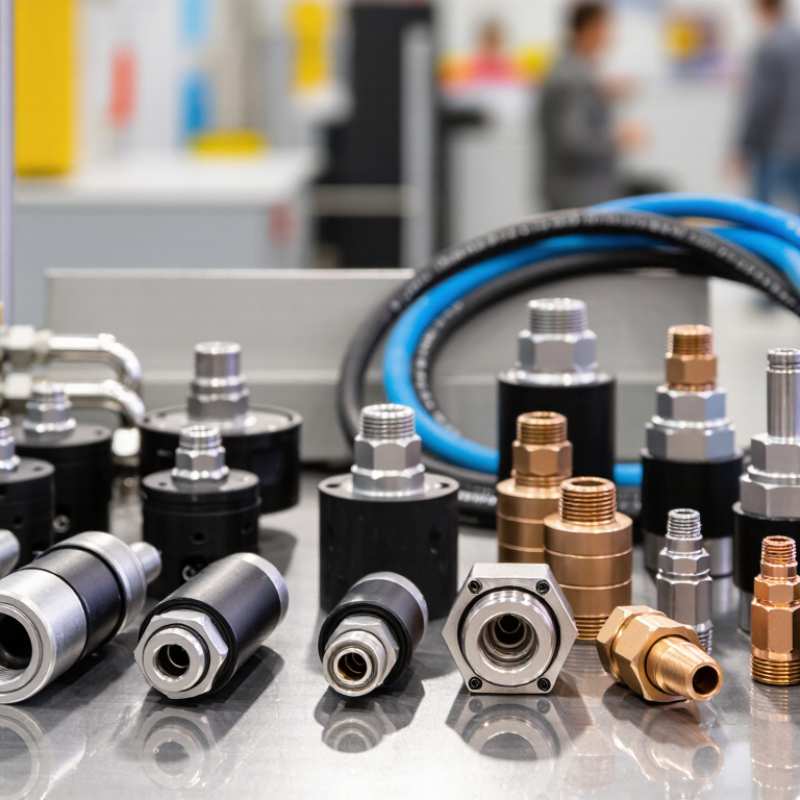
Hydraulic Couplers: Types, Functions, and Common Applications
Hydraulic couplers join hoses and equipment so fluid can move between a power source and an attachment. Quick-disconnect couplers let operators change tools with limited downtime. Flat-face designs help reduce fluid loss and dirt entry during connection. Poppet-style couplers are common on machinery, while screw-to-connect types can resist separation under vibration. No design suits every circuit.
Their job is more than making a connection. A coupler must carry the system’s flow and pressure without excessive restriction or leakage. Check the rated pressure, flow capacity, thread or interface type, and seal material against the equipment specifications. A mismatch may fit at first yet cause heat, wear, or a persistent drip. Fit is not universal.
You’ll find couplers on excavators, loaders, agricultural implements, forestry equipment, and industrial hydraulic tools. For example, an operator may connect a breaker to an excavator, then switch to a bucket attachment. Keep mating faces clean; a grain of grit can damage a seal. Depressurize the line as the equipment manual directs, and inspect seals for cuts or flattening. Field checks help, but they cannot replace the manufacturer’s specifications. Even experienced technicians sometimes overlook trapped pressure. That deserves a pause.
How to Assess Hydraulic Coupler Manufacturers for Global Purchasing
Top 10 Hydraulic Coupler Manufacturers for Global Buyers
How to Assess Hydraulic Coupler Manufacturers for Global Purchasing
A reliable assessment starts with the machine, not the sales catalog. Record operating pressure, flow rate, fluid type, temperature range, and connection dimensions. Then ask each manufacturer to confirm that its couplers suit those conditions. Check pressure ratings and test methods against your application. Small details matter.
Review material specifications, seal options, corrosion protection, and documented quality controls. For cross-border purchases, verify dimensional compatibility and request clear drawings, inspection records, and product traceability. A polished catalog is not proof. Ask how batches are tested, how defects are handled, and whether replacement parts remain available. Responses should be specific, not just reassuring.
Samples can reveal practical issues that paperwork misses. Fit couplers to actual equipment and check connection force, leakage, and performance under expected working conditions. This takes time, but skipping it can cost more later. Compare lead times, packaging, technical support, and spare-part access alongside unit price. Freight, duties, and delays affect the landed cost. I would also note where a supplier’s evidence is thin; not every gap means poor quality, but it deserves a direct question before a large order.
Profiles of Ten Leading Hydraulic Coupler Manufacturers
Profiles of ten leading hydraulic coupler manufacturers are most useful when they compare engineering capability, not just product range. Review each supplier’s pressure ratings, connection standards, materials, seal options, and published test methods. Ask whether couplers are designed for repeated connection under pressure or require depressurization. That detail affects field safety and equipment downtime. Check production capacity, regional technical support, and traceability for replacement parts.
Grand View Research’s 2024 hydraulic-hose market report estimated the adjacent global market at roughly US$10 billion in 2023. This figure is not a coupler-market estimate, but it signals the scale of equipment demand around hydraulic systems. A practical manufacturer profile should connect product specifications to real uses, such as excavator attachments, agricultural machinery, or factory maintenance. Look for clear pressure-flow data and compatibility guidance. Catalogs rarely show the whole story. Buyers should confirm performance with application-specific testing; one overlooked seal mismatch can cause leaks.
Tips: Compare operating pressure, flow rate, temperature range, and connection type before requesting quotes. Ask suppliers for test documentation and sample evaluation. Small details matter. A fast delivery promise is useful, but only when replacement parts remain available.
Comparing Product Ranges, Quality Standards, and Global Support
A useful comparison of hydraulic coupler manufacturers starts with the work the connection must perform, not a catalog headline. One supplier may offer flat-face, screw-to-connect, and quick-release designs, while another focuses on a narrower range for high-pressure lines or compact equipment. Check pressure ratings, flow capacity, fluid compatibility, temperature limits, and available sizes against the machine’s actual duty cycle. Fit matters. A coupler that looks interchangeable may still create pressure drop or awkward hose routing. Ask for dimensional drawings and test data, not just broad claims.
Quality standards reveal how consistently products are made, but certificates alone do not tell the whole story. Buyers should verify material specifications, sealing options, traceability, inspection methods, and documented pressure or impulse testing. Confirm which standard applies to each product family and market; terminology can be used loosely in sales material. Small details count. A cleanly machined seat and a clearly marked pressure rating are easier to inspect on arrival. Still, paperwork can miss field realities, and no checklist predicts every contamination or maintenance issue.
Global support is more than shipping reach. Compare regional stock, lead times, technical response hours, replacement-part access, and language coverage. Ask how the supplier handles a leaking sample, a drawing revision, or an urgent order when local inventory is low. A practical test is to send one technical question before purchase and note the clarity and speed of the reply. This is imperfect evidence, of course. It can expose gaps early.
Hydraulic Coupler Standards: Selected ISO Documents
A standards-based reference for comparing coupler product ranges. Counts show the selected ISO documents listed in each category—not manufacturer coverage, product quality, or a ranking.
Selected documents: ISO 7241-1 and ISO 7241-2 (quick-action couplings), ISO 16028 (flush-face couplings), and ISO 5675 (agricultural couplings). Consult the standards and manufacturers’ specifications for applicable requirements.
Matching a Manufacturer to Your Equipment and Operating Requirements
Choosing a hydraulic coupler manufacturer starts with the machine, not the catalog. Record working pressure, peak pressure, flow rate, fluid type, temperature range, and connection dimensions. A loader working in muddy conditions needs different sealing and dust protection from a stationary press. Check whether the coupler’s interface matches your existing equipment; similar-looking fittings are not always interchangeable. ISO 7241 specifies requirements for several quick-action coupling series, but confirm the exact series and application with the supplier.
Demand is growing across hydraulic equipment markets. Grand View Research valued the global hydraulic equipment market at USD 42.4 billion in 2023 and forecast a 4.6% compound annual growth rate through 2030. That broader market figure is not a coupler performance measure. Still, it signals why buyers should assess supplier capacity, documentation, and replacement availability—not just unit price. Ask for pressure ratings, material details, test records, and clear guidance on seal replacement. The details matter.
Tips: Share photos and measurements of the installed connection. Ask how the coupler handles pressure surges, contamination, and repeated connection cycles. A small oversight here can mean downtime. I would also verify sample parts before placing a large order; drawings can miss practical fit issues.
| Comparison Area | Equipment or Operating Need | Relevant Coupler Capability | What Buyers Should Verify |
|---|---|---|---|
| 1. Interface and interchangeability | Replacing existing couplers or connecting attachments from different suppliers | Product families designed to a stated interface, such as ISO 7241 or ISO 16028 where applicable | Confirm the exact series, size, connection dimensions, and interchangeability claim. Similar-looking couplers are not necessarily compatible. |
| 2. Agricultural equipment fit | Tractors, implements, and agricultural hydraulic circuits | Couplers intended for agricultural machinery, including designs associated with ISO 5675 where applicable | Check the tractor and implement connection requirements, coupling size, working pressure, and whether connection under residual pressure is required. |
| 3. Flat-face connection | Construction equipment and applications where reducing fluid loss and limiting dirt ingress during connection are priorities | Flat-face Quick Couplers, commonly associated with ISO 16028 designs | Verify the standard or interface, rated pressure and flow for the selected size, permitted connection conditions, and any residual-pressure limits. |
| 4. Pressure rating | High-pressure circuits or equipment with pressure peaks during operation | Models with documented working-pressure and pressure-pulse performance for the intended duty | Compare the coupler’s published rating with the circuit’s maximum operating pressure and pressure surges. Do not assume all sizes in a product family share one rating. |
| 5. Flow capacity and pressure drop | Circuits with high flow demand or sensitivity to heat and energy loss | Size options supported by flow and pressure-drop data | Request pressure-drop information at the expected flow rate. A coupler bore that is too small can add restriction and heat to the hydraulic circuit. |
| 6. Connection under pressure | Attachments or circuits that may retain pressure while disconnected | Designs specifically rated for connection or disconnection under defined residual-pressure conditions | Check the manufacturer’s permitted procedure and pressure limits. Standard quick couplers should not be assumed to connect under residual pressure. |
| 7. Materials and corrosion resistance | Outdoor use, wet environments, coastal exposure, or frequent washdown | Material and surface-finish options appropriate to the operating environment | Confirm body material, plating or coating details, corrosion-test information if needed, and compatibility with the system fluid and cleaning chemicals. |
| 8. Seal and fluid compatibility | Use with specified hydraulic fluids, temperature ranges, or specialized system requirements | Seal compounds and temperature limits documented for each model | Match seal material and temperature range to the fluid and working conditions. Confirm compatibility directly from the product documentation. |
| 9. Safety and accidental-disconnect control | Mobile machinery exposed to vibration, impact, or frequent attachment changes | Locking and retention features appropriate to the application | Review the locking method, connection procedure, and any applicable equipment safety requirements. Confirm that the coupler is fully engaged before operation. |
| 10. Supply, documentation, and support | Global procurement, maintenance planning, and replacement-part availability | Traceable product documentation, dimensional drawings, operating instructions, and distribution support | Ask for current datasheets, material and test documentation where required, lead times, spare-seal availability, and support in the destination market. |
Ratings, dimensions, materials, and standards vary by model and size. Confirm the exact product datasheet and the machine manufacturer’s requirements before selecting or replacing a hydraulic coupler.