

Who Are the Top Parchment Paper Roll Suppliers in China?
Parchment Paper Roll suppliers in China serve bakeries, food processors, retailers, and packaging converters. Choosing a supplier takes more than comparing prices. Buyers need to check paper weight, roll width, release performance, packaging quality, and consistency between batches. A roll that looks suitable in a sample may behave differently on a fast production line. Small details matter.
Industry figures offer useful context, but they do not rank parchment manufacturers. The China Paper Association’s 2023 annual report puts China’s paper and paperboard production at about 129.65 million tonnes. Grand View Research estimated the global paper packaging market at USD 374.4 billion in 2023. These figures describe broad paper and packaging activity, not parchment paper output specifically. That distinction matters. It prevents market scale from being mistaken for supplier capability.
This guide examines potential Chinese suppliers through practical checks: product specifications, available roll formats, quality-control evidence, export experience, and responsiveness to sample requests. Buyers should also ask how suppliers manage coating uniformity and protect rolls from moisture during storage and shipment. A polished catalogue is not enough. Public company information can be incomplete, and capacity claims are not always easy to compare. Treat rankings as a starting point, then verify details directly with each manufacturer. A careful comparison may take longer, but it can reveal which supplier fits the intended use—not merely which one quotes the lowest price.
What Parchment Paper Rolls Are and How They Are Used
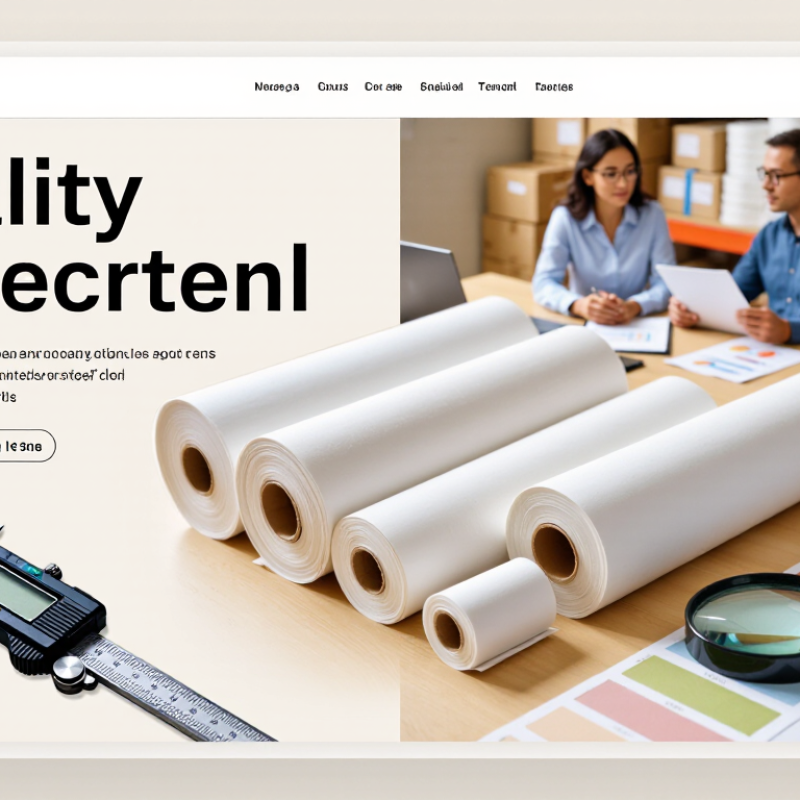
Parchment paper rolls are sheets of paper wound around a cardboard core. Many are made from cellulose and treated with a food-contact silicone coating, which helps food release more easily. Unlike wax paper, parchment is designed for oven use within the temperature limits printed on its packaging. Those limits matter. The coating and paper can darken or become brittle when overheated, so check the instructions rather than assuming every roll performs the same way.
In a home kitchen, tear off a piece to line a baking tray before placing cookies, vegetables, or fish on it. The paper can reduce sticking and make cleanup simpler, though it does not replace careful food handling. It also helps when rolling dough: place dough between two sheets to limit extra flour on the counter. A practical detail: cut the sheet to fit, since loose edges may curl toward an oven element. It is not magic. Some rolls tear unevenly, and damp foods can still stick. For reliable results, keep the paper away from open flames and avoid using it beyond its stated heat rating.
How China’s Parchment Paper Roll Supply Market Is Organized
China’s parchment paper roll supply market is built around several types of businesses. Paper mills produce base paper, while coating and converting factories add the surface treatment, slit rolls, and prepare them for packing. Some exporters coordinate orders without operating every production step themselves. The label “supplier” can therefore describe different roles. That distinction matters.
Manufacturing and converting capacity may be located in different industrial areas, so a roll can pass through several facilities before shipment. Buyers usually compare grade, roll width, core diameter, coating consistency, and packaging details. Ask for a specification sheet and a production sample. Check whether the sample matches the quoted product, especially in release performance and thickness. Small differences show up on the production line.
Supplier directories and trade listings can help identify potential factories, but they do not prove who makes the paper. Not always. Request clear information about the manufacturing and converting sites, along with recent quality records and inspection procedures. Confirm how defects are handled and whether repeat orders can follow the same specifications. Market information is not always transparent, and even a careful buyer can overlook a process change. A direct factory visit or independent pre-shipment inspection can reduce that uncertainty.
What Distinguishes Leading Parchment Paper Roll Suppliers in China
Leading parchment paper roll suppliers distinguish themselves through measurable consistency, not polished brochures. The China Paper Association’s Annual Report of China Paper Industry 2023 recorded 127.05 million tonnes of paper and paperboard production. That figure describes the wider sector, not parchment output, but it signals a substantial manufacturing base. Numbers need context.
Ask suppliers for roll-level specifications covering basis weight, thickness, width tolerance, and grease resistance. ISO 536 measures paper grammage, while ISO 534 covers thickness and apparent density. For parchment, request coating-uniformity checks and samples from multiple production lots. Inspect the sheet under bright light; thin patches and uneven edges can become obvious during baking or wrapping. Small defects matter.
Reliable suppliers also provide traceable test records, clear food-contact documentation, and practical answers about storage and converting. Compare sample performance under your actual oven temperature and handling conditions, rather than relying on a single demonstration. A supplier’s stated capacity does not prove consistent quality. Even a capable mill can miss a coating edge; claims deserve verification, and buyers should record what still needs improvement.
Who Are the Top Parchment Paper Roll Suppliers in China?
What distinguishes leading suppliers is the ability to offer consistent, clearly specified products. Basis weight is one useful specification to compare when reviewing parchment paper rolls.
Representative commercial basis-weight examples, not supplier rankings or market-share data. Actual specifications vary; confirm basis weight and other product requirements with each supplier.
How to Assess Supplier Quality, Certifications, and Product Standards
Assessing a parchment paper roll supplier starts with evidence, not a polished catalog. Request current certificates and check the issuing body, covered product, factory site, and expiry date. A certificate for another paper grade may prove little. Ask for test reports that identify basis weight, thickness, tensile strength, grease resistance, and performance at stated oven temperatures. The values should match the roll you intend to buy, not a generic sample. Small details matter. Compare a supplier sample using your own measuring tools: weigh a measured sheet, check roll width, and test release after baking sticky dough. Record the batch number and retain an unopened roll for comparison.
Product standards should be clear before a purchase order is placed. Confirm intended food-contact use, coating composition, maximum temperature, and any limits on repeated heating. Ask whether test reports come from an independent laboratory and whether their methods are stated. Verify traceability from paper and coating batches to finished rolls. A site audit, video walkthrough, or dated production records can help confirm that controls are used consistently. Not every buyer can inspect a mill in person; that is a real gap, so request recent evidence and repeat checks after material changes. Be cautious when answers rely only on verbal assurances. Test it yourself. A brief trial run in your own ovens may reveal curling, odor, or uneven release that paperwork misses.
Who Are the Top Parchment Paper Roll Suppliers in China? - How to Assess Supplier Quality, Certifications, and Product Standards
Use this supplier assessment matrix to compare offers. The specifications below are practical screening benchmarks, not claims about any particular supplier or universal product requirements. Confirm suitability for the intended food, temperature, and use conditions.
| Assessment dimension | Practical benchmark or requirement | Evidence to request | Warning signs |
|---|---|---|---|
| Product construction | Confirm whether the roll is single- or double-sided and silicone-coated or otherwise treated. Specify roll width, length, core size, and sheet basis weight in the purchase specification. | Technical data sheet, product sample, and written confirmation that delivered goods match the approved specification. | Unclear coating description, dimensions stated without tolerances, or sample and bulk-production specifications that differ. |
| Basis weight and thickness | A buyer may use approximately 38–45 g/m² as an initial screening range for some baking-paper products; the suitable value depends on the application and construction. Set an agreed tolerance for each order. | Lot-specific test results. Basis weight can be measured using ISO 536; paper thickness can be measured using ISO 534. | Only nominal figures are provided, with no test method, tolerance, or batch traceability. |
| Heat-use claim | Some products are marketed for oven use up to about 220°C, but the usable temperature and duration are product-specific. Confirm the exact conditions and intended application. | Product-specific test report or documented validation, plus clear maximum-temperature and usage instructions. | A temperature claim without a stated test basis, exposure duration, or restrictions on direct contact with heating elements. |
| Grease resistance and release | Define expected grease resistance and release performance using the foods and process conditions relevant to the buyer. No single result guarantees performance for every food or oven condition. | Relevant laboratory results, such as a stated grease-resistance test method where applicable, and samples tested in the buyer’s process. | General “non-stick” or “greaseproof” claims with no supporting test details or application limits. |
| Food-contact compliance | Check compliance for the destination market and intended food-contact conditions. U.S. paper-related provisions may include 21 CFR 176.170 or 21 CFR 176.180, depending on use. In the EU, assess applicable requirements including Regulation (EC) No 1935/2004 and Regulation (EC) No 2023/2006. | A current, product-specific declaration of compliance or other substantiation; supporting test reports should identify the tested material and conditions. | A generic certificate that does not identify the product, market, test conditions, or responsible issuing party. |
| Quality management | Look for documented controls covering incoming materials, production checks, nonconforming goods, corrective actions, and lot traceability. | Valid ISO 9001 certificate, where held, with a scope and site that match the manufacturing activity; audit records or a quality-control plan. | A certificate that is expired, outside the relevant scope, or issued for a different facility. |
| Packaging safety systems | For buyers requiring a packaging-safety certification, check whether a recognized scheme such as BRCGS Packaging Materials applies to the supplier’s site and product scope. | Current certificate with site details, certification scope, validity dates, and a verifiable certificate reference. | Treating a management-system certificate as proof that every product complies with every food-contact law. |
| Fiber sourcing claims | If responsible sourcing is required, define the claim and percentage or chain-of-custody requirement in the contract. FSC or PEFC chain-of-custody certification relates to sourcing claims, not oven performance or food-contact compliance. | Valid chain-of-custody certificate and claim documentation applicable to the specific supplied product. | Environmental logos or claims without a valid certificate, traceable product claim, or supporting documentation. |
| Production consistency | Agree on inspection criteria for roll dimensions, winding, coating uniformity, visible defects, packaging, and lot identification before mass production. | Pre-production sample, approved specification, inspection records, and a documented process for handling complaints or corrective actions. | No defined acceptance criteria, mixed or missing lot codes, or refusal to provide production inspection records. |
| Supplier verification | Verify the production site, manufacturing scope, and capacity against the specific order rather than relying only on a trading profile or general capability statement. | Business and site documentation, a remote or on-site audit where appropriate, sample approval, and a written order specification. | Unverified certificates, inconsistent site details, or inability to explain who manufactures and inspects the product. |
Buying tip: Compare suppliers using the same written specification, destination-market requirements, sample approval process, and lot-level evidence. Verify certificates and compliance documents with their issuers or through the relevant official systems.
How to Compare Pricing, Customization, and Delivery Options
Who Are the Top Parchment Paper Roll Suppliers in China?
How to Compare Pricing, Customization, and Delivery Options
When comparing parchment paper roll suppliers in China, look beyond the quoted price per roll. Ask for paper weight, width, length, core diameter, coating type, and food-contact documentation. A lower quote may reflect a shorter roll or thinner paper. Request a sample and measure it yourself. That matters. Compare prices using matching specifications, packaging, and order quantities. Check whether tooling or printing fees apply.
Customization may include roll dimensions, perforation, private-label packaging, and carton markings. Confirm tolerances in writing; a few millimeters can affect dispenser fit. Ask how the supplier checks coating consistency and winding tension. Request a recent quality record or inspection checklist, and verify that it applies to your product. A sample may look fine but behave differently across a full production run. This part deserves a second look.
Tips: Ask for a written production timeline, not just an estimated shipping date. Clarify sample approval, production lead time, packing method, and freight arrangements. Compare delivery options by total landed cost and transit range, allowing for port or customs delays. Keep a small buffer in your schedule. Even a tidy spreadsheet cannot predict every delay.