

Top Silk Covered Litz Wire Manufacturers for Global Buyers
Choosing a supplier for silk covered litz wire takes more than comparing catalog prices. Buyers need to understand how strand count, conductor size, insulation, and silk serving match the winding design. These details affect handling, fit, and performance in the finished component. A neat spool is useful, but it proves little about consistency between production lots.
This guide introduces manufacturers serving global buyers and outlines practical points for comparing them. Look for clear specifications, traceable test records, responsive technical support, and realistic information about capacity and lead times. Ask whether samples are available, and confirm dimensions and insulation requirements before approving a production order. Small differences matter. A wire that seems suitable on paper may not wind smoothly around a tight bobbin or fit the available slot. That is easy to overlook.
Manufacturer claims should be checked against the needs of the actual application, not treated as guarantees. Buyers may also need to clarify packaging, export documentation, quality controls, and communication across time zones. No shortlist can replace direct evaluation. Still, comparing suppliers through consistent questions can make the process more reliable and reveal where further testing is needed. The right choice depends on the design, production volume, and support required—not just a company’s position in a list. Some specifications remain unclear until a sample is tested, and that uncertainty deserves attention.
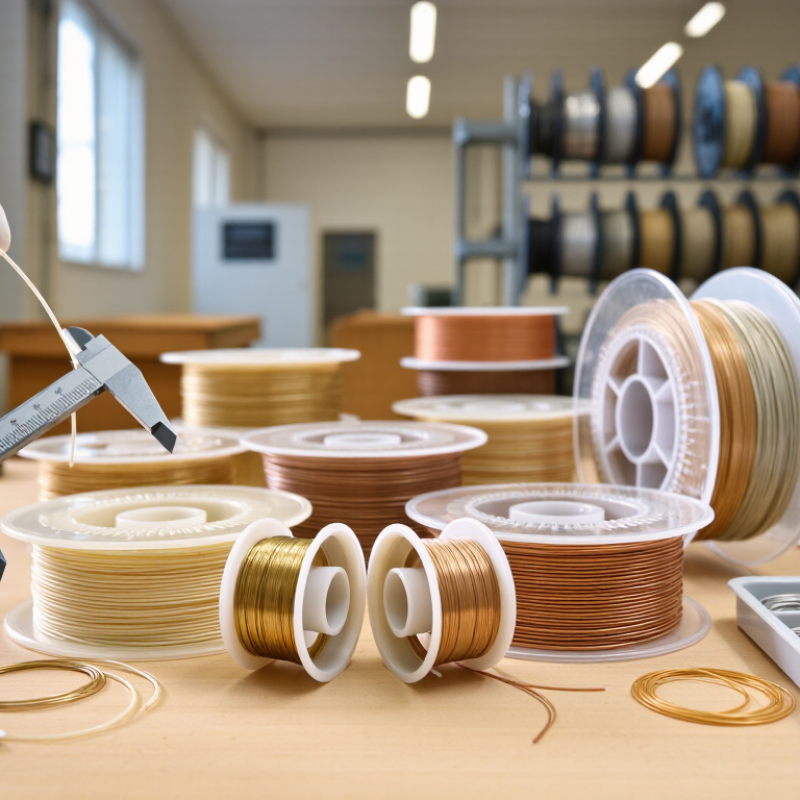
Silk-Covered Litz Wire: Structure, Materials, and Core Properties
Silk-covered litz wire consists of many fine copper strands, each coated with electrical insulation, then twisted or braided into a flexible conductor. A textile yarn wraps the bundle as an outer serving. The strands share current more evenly at suitable frequencies, helping reduce skin and proximity effects. Not magic, though.
The copper may be round or shaped, while strand count, diameter, and twisting pattern vary by design. The covering is commonly silk or a silk-like yarn, selected for handling, abrasion resistance, and a compact finish. It can help keep the bundle tidy during winding. The outer wrap should not be treated as a substitute for verified electrical insulation.
Its useful properties depend on construction. Fine strands can improve performance in high-frequency coils, transformers, and inductors, while the serving offers a smooth surface for winding. Buyers should check operating frequency, temperature rating, overall diameter, and compatibility with varnish or impregnation processes. “Silk” alone tells little. A neat-looking sample may still have an unsuitable strand size or twist pitch, so drawings and test data matter more than appearance.
Top Silk Covered Litz Wire Manufacturers for Global Buyers - Silk-Covered Litz Wire: Structure, Materials, and Core Properties
| Selection Dimension | Structure, Material, or Property | What Global Buyers Should Confirm |
|---|---|---|
| Conductor | Litz wire is made from multiple fine conductor strands. Copper is commonly used; conductor plating, such as tin or silver, may be specified for particular design requirements. | Confirm conductor material, strand diameter, strand count, and whether the strands are bare or plated. Do not assume plating is included unless stated in the specification. |
| Individual strand insulation | Each strand is typically coated with electrical insulation, commonly an enamel selected for the intended application and temperature requirements. | Request the insulation type and applicable thermal class from the supplier’s technical documentation. The silk covering is not a substitute for strand enamel. |
| Litz bundle construction | Insulated strands are twisted or otherwise transposed into a bundle. Strand count, strand size, and twisting pattern affect the conductor’s dimensions and electrical behavior. | Specify the strand count, individual strand diameter, bundle configuration, and any required lay or twist details. These characteristics are design-dependent rather than universal. |
| Silk covering | A textile yarn is served around the litz bundle for a protective outer covering. Depending on the product specification, “silk” may refer to natural silk or a synthetic silk-like yarn. | Confirm the covering material, number of covering layers, coverage, and finished outer diameter. Ask the supplier to identify the yarn material explicitly. |
| AC-loss behavior | Properly designed litz construction can reduce the effects of skin and proximity losses by subdividing and transposing the conductor strands. Performance depends on frequency and construction. | Provide the intended operating frequency, waveform, current, and winding arrangement. A litz construction does not eliminate AC losses, and suitability should be verified for the application. |
| Electrical and dimensional data | Electrical resistance and finished dimensions depend on conductor area, strand construction, covering, and manufacturing tolerances. | Request the specified resistance, finished outer diameter and tolerance, conductor cross-sectional area, and the measurement conditions used in the supplier’s data sheet. |
| Thermal limits | The usable temperature range is governed by the materials and construction of the complete wire, including strand insulation and outer covering. | Confirm the documented temperature limits for the complete product and check that they suit the winding process and operating environment. |
| Testing and quality records | Electrical and dimensional checks may be specified for a particular order; the tests performed and acceptance criteria depend on the product specification. | Agree on required inspection items, test methods, sampling, traceability, and documentation before placing an order. Request records relevant to the application. |
| Supplier capability | Manufacturers may differ in available strand sizes, bundle configurations, covering materials, tolerances, and custom production options. | Compare suppliers using a shared technical specification and confirm sample availability, production tolerances, lead time, export documentation, and change-control procedures. |