

Top Stick Welding Sticks Manufacturers in China
China’s stick electrode market spans large export manufacturers, specialized producers, and regional factories. Comparing them takes more than reading product catalogs. Buyers should examine electrode classifications, coating consistency, batch traceability, packaging, and documented quality controls. A box may look ordinary, yet damp flux or uneven coating can affect arc stability and weld appearance. Small details matter.
This guide to Top Stick Welding Sticks Manufacturers in China outlines practical points for assessing suppliers and their product ranges. It considers common electrode types, manufacturing capabilities, testing information, and the support available after purchase. As a shop-floor reminder: “A steady arc begins with an electrode suited to the job.” A named expert quotation cannot be responsibly attributed without a verifiable source; add one only after confirming the expert’s identity and exact wording. That check is worth the extra effort.
Manufacturer claims should be weighed against current technical documents and sample performance. Ask how the supplier manages moisture-sensitive products, identifies production batches, and handles customer questions. Compare answers with your application and welding procedure. No single factory is right for every buyer. Price, delivery schedules, and impressive catalogs can distract from fit. This overview is a starting point, not a substitute for testing electrodes under relevant working conditions.
Types and Standards of Stick Welding Electrodes
Stick electrodes are commonly grouped by coating type: cellulosic, rutile, and basic low-hydrogen. Cellulosic electrodes produce a forceful arc and deep penetration, useful for root passes on pipe. Rutile types strike easily and leave a smoother bead, often preferred for general fabrication. Basic electrodes help limit weld-metal hydrogen, but damp coatings can undermine that benefit. Keep them dry.
Classification tells you more than the coating. Under AWS A5.1/A5.1M, E7018 indicates an electrode with a minimum tensile strength of 70 ksi; “1” denotes all-position use, while “8” identifies coating and current characteristics. ISO 2560:2020 classifies covered electrodes using properties such as strength, impact performance, and chemical composition. These systems are not directly interchangeable, so match the required standard on the drawing or procedure. A code is useful, not magic.
For practical selection, check position, base-metal strength, polarity, and service temperature before opening a pack. A damp electrode may look normal. Its deposited weld can still fail hydrogen-control requirements. AWS classification documents and ISO 2560 provide the technical basis; actual suitability should be confirmed against the welding procedure and batch documentation. One detail is easy to miss: storage records matter as much as the label.
Criteria for Evaluating Chinese Electrode Manufacturers
A reliable Chinese stick welding electrode manufacturer should provide more than a polished catalogue. Check whether its product data lists electrode classification, recommended current range, polarity, and suitable welding positions. Ask for recent test records and quality documents, then confirm that batch numbers connect those records to the products you receive. Consistency matters. Compare several production batches, not just one attractive sample. A single trial can miss variation in arc stability, slag removal, or weld appearance.
Tips: Request samples from different batches. Test them with your own power source and base metal. Note arc starts, spatter, and slag release. Keep the results; memory is unreliable.
Evaluate production control and communication, too. Ask how the factory manages raw materials, drying, coating thickness, and packaging that protects electrodes from moisture. A useful supplier can explain storage conditions and answer technical questions clearly, without promising that one electrode suits every job. Check whether it can support your order volume and lead time, and clarify how defects or inconsistent batches are handled. These checks take time. They are not perfect, either: a factory visit or document review cannot replace ongoing inspection. Start with a modest order and review performance before expanding.
Leading Stick Welding Electrode Manufacturers in China
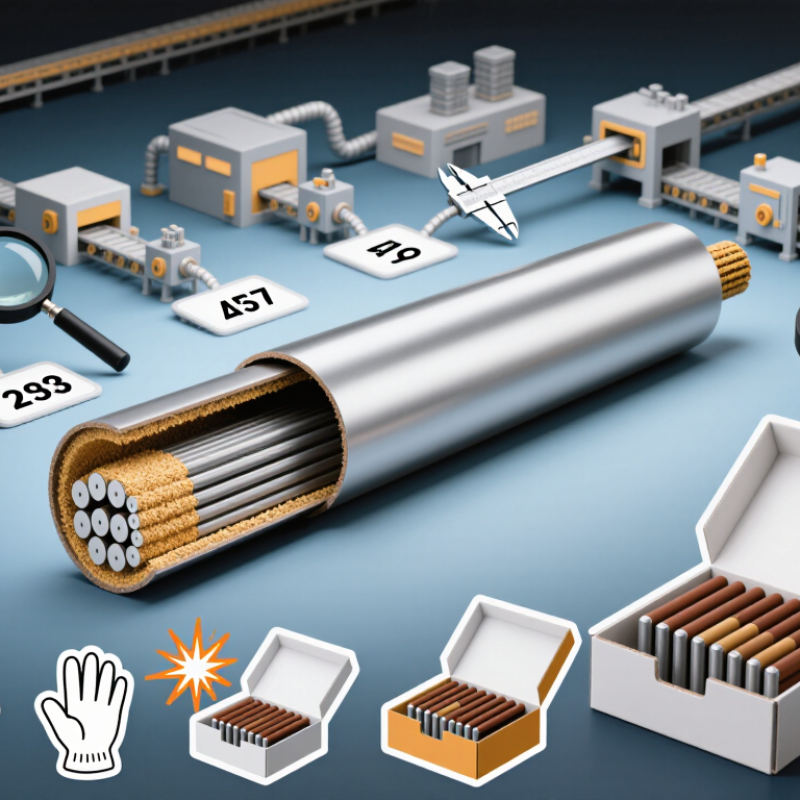
Leading stick welding electrode manufacturers in China combine controlled production with practical application testing. Consistent coating thickness matters. It helps the electrode burn evenly and reduces erratic arc behavior. Manufacturers typically manage core-wire preparation, flux mixing, coating, drying, and packaging. Each stage can affect the finished rod.
For buyers, a polished sample bead is not enough. Check the electrode classification, recommended current range, polarity, and test documentation. Ask how moisture is controlled during drying and storage; damp coatings may cause porosity or unstable starts. A useful trial uses the same steel thickness, joint position, and power source as the intended job. Watch arc initiation, spatter, slag removal, and bead appearance. Small differences show up quickly.
Supplier evaluation also deserves a second look. Factory capacity and attractive pricing do not prove batch consistency. Request recent inspection records and compare samples from separate production lots. Packaging matters too: sealed cartons and clear storage guidance help protect electrodes during transport. I would still verify performance on the actual workpiece. Lab results cannot capture every site condition.
Product Ranges, Certifications, and Manufacturing Capabilities
Chinese stick welding manufacturers may offer rutile, basic, and cellulose electrodes in several diameters and package sizes. These ranges serve general fabrication, structural work, pipeline applications, and repair tasks, though suitability depends on the welding procedure and base metal. Diameter choices affect deposition rate and access to narrow joints. Ask for the classification, recommended current range, and storage guidance for each product. Small details matter.
Manufacturing capability involves more than production volume. Look for controlled wire preparation, coating consistency, drying processes, and sealed packaging that protects electrodes from moisture. Certifications should match the product and the buyer’s requirements; request current documents rather than relying on catalog claims. Batch test reports can help confirm chemical composition and mechanical properties. Some catalogs look more complete than the factory’s actual records. That deserves scrutiny. Buyers can also ask about sample testing, production lead times, and traceability from raw materials to finished cartons. A factory visit or independent inspection may clarify how procedures work on the production floor, but neither replaces checking the specific batch and documentation.
Top Stick Welding Sticks Manufacturers in China - Product Ranges, Certifications, and Manufacturing Capabilities
Industry reference covering common product types, standards, and manufacturing capabilities. It is not a ranking or a claim that any individual manufacturer holds a particular certification. Product availability and specifications vary by producer.
| Product / Capability Area | Common Classification or Standard | Typical Range or Characteristics | Typical Applications |
|---|---|---|---|
| Rutile mild-steel electrodes | AWS A5.1 E6013; ISO 2560-A classification system | Common diameters include 2.0–5.0 mm. Generally designed for AC or DC operation; usability depends on the specific product. | General fabrication, maintenance, and welding of mild-steel structures. |
| Low-hydrogen electrodes | AWS A5.1 E7018; ISO 2560-A classification system | Common diameters include 2.5–5.0 mm. Low-hydrogen coatings require moisture-controlled storage and handling as specified by the manufacturer. | Structural steel and applications where weld-metal strength and hydrogen control are important. |
| Cellulosic electrodes | AWS A5.1 E6010 and E6011 | E6010 is typically DC electrode-positive; E6011 is designed for AC or DC use. Available diameters and operating limits are product-specific. | Root passes, repair work, and field welding; suitability depends on the procedure and base material. |
| Stainless-steel electrodes | AWS A5.4, including classifications such as E308L-16 and E309L-16 | Alloy and coating type are selected to match the required weld-metal composition and service conditions. | Stainless-steel fabrication and, for suitable filler classifications, joining certain dissimilar metals. |
| Cast-iron electrodes | AWS A5.15, including nickel-iron and nickel-based electrode classifications | Filler-metal selection and welding procedure depend on the cast-iron grade, component geometry, and repair requirements. | Repair and joining of suitable cast-iron components. |
| Manufacturing processes | Process controls are normally defined by the manufacturer’s quality system and product specifications. | Typical operations include raw-material inspection, coating-mix preparation, wire straightening and cutting, extrusion, drying or baking, finishing, and batch inspection. | Repeatable electrode dimensions, coating condition, packaging, and batch traceability. |
| Quality testing and documentation | Testing and classification may reference the applicable AWS or ISO product standard. | Depending on the product and order, checks may include dimensions, coating condition, weld-metal chemistry, mechanical properties, and usability tests. | Request the applicable test reports, product certificates, and batch or lot identification for the specific order. |
| Management-system certifications | ISO 9001 (quality management); ISO 14001 (environmental management); ISO 45001 (occupational health and safety) | These are organization-level management-system standards, not welding-electrode classifications. Certification scope and validity should be verified with the issuer. | Supplier qualification and review of manufacturing and management systems. |
| Packaging and export readiness | Packaging specifications are product- and order-dependent. | Common formats include inner packs or cartons, with moisture-resistant packaging options available for selected products. Minimum order quantities and private-label options vary. | Domestic distribution and export shipments requiring clear labeling, product identification, and suitable moisture protection. |
Buyer check: confirm the exact classification, approved welding procedure, required certificates, packaging conditions, and current certification scope directly with the supplier before placing an order.
How to Compare Suppliers for Industrial Applications
Top Stick Welding Sticks Manufacturers in China
How to Compare Suppliers for Industrial Applications
Compare documented performance, not catalog claims. Grand View Research valued the global welding consumables market at USD 15.36 billion in 2023. That scale signals demand, not supplier quality. Request electrode classifications and test reports, then check them against AWS A5.1/A5.1M or ISO 2560:2020. Review lot-level certificates, coating consistency, sealed packaging, and production traceability. Ask for samples from the production batch you plan to order.
Trial the rods on your actual steel, joint position, and power source. Record arc starts, spatter, slag removal, bead shape, and deposited-metal results. Confirm storage guidance, shelf life, lead time, and corrective-action procedures in writing. A neat brochure is not enough. One missing batch record may indicate weak controls, or merely poor paperwork; ask before deciding. Compare cost per usable kilogram, including rejected rods and rework, rather than price per box.
Tips: Keep packs dry, log batch numbers, and weld a short test coupon before approving a bulk order. Retain the coupon and inspection notes for repeat orders.
Top Stick Welding Sticks Manufacturers in China: How to Compare Suppliers for Industrial Applications
These example weights show how an industrial buyer might prioritize supplier evaluation. Adjust them to match your application, required electrode classifications, quality controls, production needs, and delivery schedule. Verify supplier claims and certifications directly.