

What Are the Top Types of Natural Raffia Bags?

Natural Raffia Bags range from roomy market totes to compact evening clutches, each shaped by its weave, handle, and intended use. A Grand View Research report estimated the global handbag market at USD 52.3 billion in 2023, with projected growth through 2030. That figure covers handbags broadly, not raffia bags alone. It offers useful context, but it should not be mistaken for a raffia-specific market measurement.

Details matter. A tightly woven tote can carry daily essentials, while an open-weave shopper feels lighter but may need a fabric insert. Bucket bags offer structure; crossbody styles keep hands free; clutches suit smaller loads. Natural raffia also varies in color and texture, so slight irregularities are normal—not automatically proof of quality. Check the stitching, lining, handle attachment, and finish in close-up photographs. Sustainable-fashion advocate Orsola de Castro is widely quoted as saying, “The most sustainable garment is the one already in your wardrobe.” Her comment concerns clothing, not raffia bags specifically, but it offers a useful lens: consider whether a bag will be used often and cared for well. One caveat: product descriptions can use “raffia” loosely. The sections ahead compare common bag types and practical details, while distinguishing natural raffia from look-alike fibers wherever product information allows. A perfect label is rare. Verification still matters.
What Are the Top Types of Natural Raffia Bags?

Natural Raffia Fiber: Leaf Strips Can Reach About 1.5 m in Length

Natural raffia is made from palm leaf fibers, split into long, flexible strips. Under suitable growing and preparation conditions, individual strips can reach about 1.5 metres. That length gives makers room to form continuous woven panels rather than joining many short pieces. The usable length varies; leaf age, drying, and hand-splitting can all affect it. A measurement is a guide, not a promise.

This fiber can appear in several bag forms: open-weave market totes, tightly braided shoulder bags, and smaller structured clutches. Longer strips help create broad sides with fewer joins, while shorter pieces may suit dense patterns or edging. It bends easily. The surface may show slight shifts in width and tone, natural variations in hand-prepared material. Still, unevenness can also reflect rushed work, so inspect the weave closely.

When choosing a bag, look at the handles, seams, and points where the fiber turns sharply. These spots take more strain during daily use. A neat finish should feel secure, though raffia can fray or suffer moisture damage. Keep it dry. I would not judge quality by strip length alone; consistent weaving and comfortable construction matter just as much.

What Are the Top Types of Natural Raffia Bags? - Natural Raffia Fiber: Leaf Strips Can Reach About 1.5 m in Length

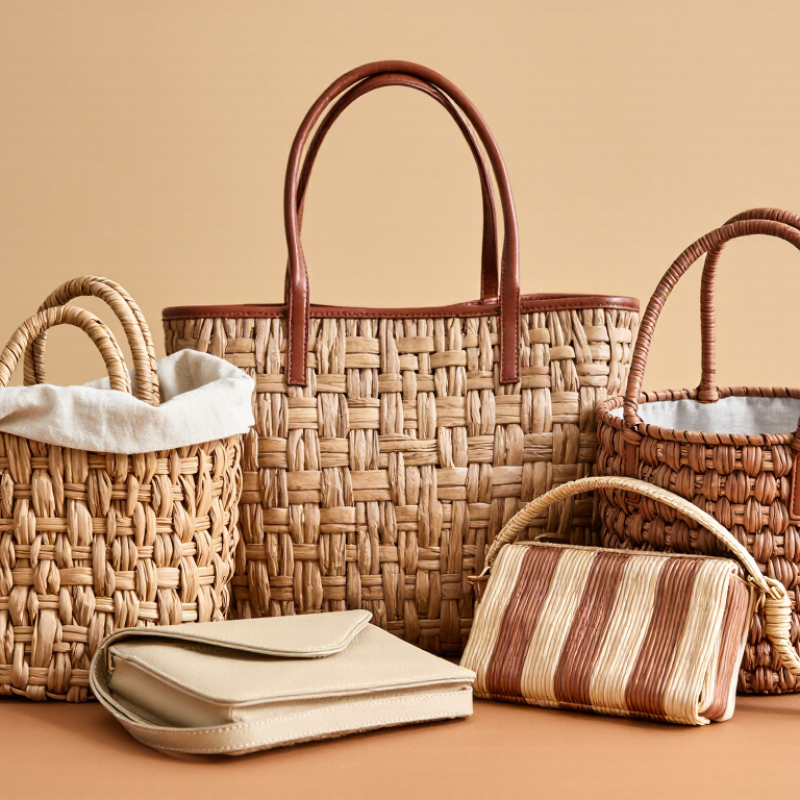
Raffia bags are made in a range of woven shapes. Their appearance and performance depend on the weave, lining, handles, and any materials combined with the raffia.

Bag Type Typical Shape Common Construction Typical Details Common Use
Raffia Tote Open, roomy body with a broad top Woven raffia panels, sometimes with a fabric lining Two shoulder or hand-carry handles; may include an inner pocket or magnetic closure Everyday carry, shopping, and casual outings
Market Basket Structured basket shape, often with a wide opening Firmly woven raffia, sometimes reinforced at the base Short handles or longer shoulder handles; often unlined Market visits, picnics, and carrying light items
Crossbody Bag Compact rectangular, rounded, or flap-front body Woven raffia exterior, often paired with a fabric lining Long adjustable strap; commonly has a flap, zip, or other closure Hands-free daily wear and travel
Clutch Small, flat or softly structured shape Tightly woven raffia, sometimes with a textile lining Usually carried by hand; may have a clasp, zip, or removable wrist strap Evening occasions and carrying a few essentials
Bucket Bag Rounded base with a taller, open-top body Woven raffia body, often with a drawstring or fabric insert Shoulder or crossbody strap; may include a top handle Casual outings and day trips
Mini Raffia Bag Small-scale version of a tote, basket, or crossbody silhouette Fine or compact raffia weave Short handle or long strap; limited space for small essentials Light carry and warm-weather styling

Raffia Tote Bags: Open-Top Shapes, Handles, and Everyday Carry

A raffia tote usually has a broad, open mouth and a simple body that can sit upright when lightly filled. Its shape may be rectangular, softly rounded, or slightly tapered at the base. These small differences matter: a flat-bottomed tote is easier to set beside a chair, while a flexible shape folds neatly into a suitcase. Natural raffia strands vary in tone and thickness, so the surface may look subtly uneven. That is part of its character, not always a sign of poor workmanship.

Handle design affects everyday comfort. Short handles sit close to the shoulder or fit in the hand; longer ones make a loaded bag easier to carry over a light jacket. Check where the handles are attached and whether their stitching feels secure. A tote holding a water bottle, book, and wallet can pull more than expected. Keep the load modest. Raffia is not a rigid frame, and heavy contents may stretch the weave over time.

The open top makes a tote quick to pack, especially for a market visit or a day outdoors. It also means small items can shift or become visible. A fabric pouch helps keep keys and earbuds together, though it adds one more thing to carry. I might choose a lined version for daily commuting, but the extra lining can make a breezy tote feel less airy. Neither choice is perfect. Check the opening width, handle drop, and care instructions before choosing one for regular use.

Raffia Market Bags: Roomy Basket Weaves for Shopping and Travel

Raffia market bags are defined by their roomy shape and open basket weave. Their broad bases can hold produce, a folded towel, or a light jacket without feeling cramped. Many have flexible handles that sit comfortably over the shoulder. Room matters. Check the handle attachment and base stitching, since these points carry much of the bag’s weight.

For shopping, a wide opening makes it easy to reach for fruit or a wallet. The weave also lets air circulate, which can help keep a damp towel from staying enclosed. But open sides offer little protection from rain or loose items. A small fabric pouch can keep keys and receipts from slipping through gaps. Not always. Weave density and finishing vary, so inspect the bag rather than assuming every raffia style is equally sturdy.

On a short trip, a market bag can carry sandals, snacks, and a paperback beside your luggage. It works best for light, bulky items, not heavy bottles or sharp-edged goods. Natural raffia may soften or change shape with repeated use, especially if stored while damp. Let the bag dry fully, then keep it in a cool, dry place. The slightly uneven texture is part of its appeal, though it can also mean the bag looks less uniform than expected.

Raffia Shoulder and Crossbody Bags: Strap Styles and Hands-Free Use

For natural raffia bags, strap design changes how the woven body feels in daily use. Short shoulder straps keep the bag close and make it easy to reach, but they can slip over a smooth coat. A longer crossbody strap spreads the load across the torso and leaves both hands free. Useful details include adjustable buckles, softly finished edges, and reinforced attachment points. Check where the strap joins the bag. That area takes repeated pulling, especially when the bag holds a phone, wallet, and water bottle.

Small detail. Not trivial. Raffia varies in thickness and flexibility, so a rigid strap may feel out of balance beside a relaxed weave. Try the bag with your usual belongings; an empty sample can conceal an uncomfortable fit. Grand View Research estimated the global handbag market at USD 73.32 billion in 2022. This is broad market context, not evidence of raffia-specific demand or preferred strap styles. For shoppers, comfort is easier to judge directly: note whether the strap twists, whether the bag swings while walking, and whether the woven edge rubs against clothing. A crossbody style may feel secure, yet its longer strap can catch on a chair or crowded doorway.

Raffia Clutches and Mini Bags: Compact Formats for Occasion Wear

Raffia clutches and mini bags suit occasions when a large tote feels cumbersome. Their handwoven texture adds warmth to a simple dress, linen suit, or evening separates. Look for a firm base, smooth lining, and secure clasp; these details help protect a phone, cards, and lipstick. Small, but not trivial. A wrist loop or detachable strap also leaves one hand free for a drink or greeting.

The scale of the broader market offers useful context, though it is not raffia-specific. IMARC Group estimated the global handbag market at US$67.6 billion in 2023 and projected US$100.1 billion by 2032. Its report covers many bag types and materials, so it cannot prove demand for raffia occasion bags alone. That distinction matters. Raffia is lightweight and tactile, but open weaving can snag on jewelry, and prolonged moisture may weaken the finish. Check the weave near the corners and closure before buying. I’d also test the clasp with one hand; some attractive mini bags are awkward to open when standing. A slightly imperfect weave can be part of the appeal, but loose strands around stress points deserve a closer look.