

Why Choose a Hydrogen Purification System?
A hydrogen purification system is not merely an accessory to production. It helps remove water, carbon monoxide, methane, and other residual gases before hydrogen reaches a sensitive process. The right purification train depends on feed composition, required purity, pressure, and flow rate. A pressure swing adsorption unit, for example, may suit one stream, while membranes or other methods may fit another. The details matter. A moisture analyzer and gas chromatograph can reveal what a visual inspection cannot.
The International Energy Agency’s Global Hydrogen Review 2024 estimates that hydrogen demand reached about 97 million tonnes in 2023, while low-emissions hydrogen remained below 1% of global production. That gap makes efficient handling and quality control increasingly important, though purification alone cannot make hydrogen low-carbon. IEA Executive Director Fatih Birol described the wider momentum this way: “Hydrogen is enjoying unprecedented momentum around the world, and this momentum is set to continue.” For operators, momentum still has to meet practical realities: energy use, maintenance, recovery rate, and the purity required at the point of use. Not a silver bullet. A poorly matched system can add cost without solving the real bottleneck. The careful choice begins with measured feed-gas data, clear product specifications, and a candid review of operating conditions.
What a Hydrogen Purification System Does
Why Choose a Hydrogen Purification System?
What a Hydrogen Purification System Does
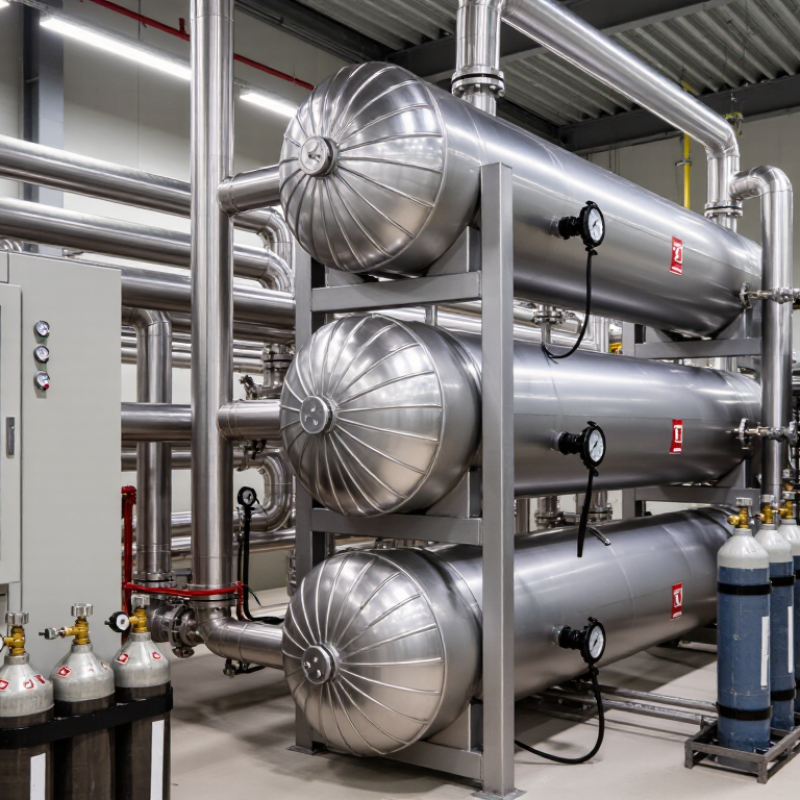
A hydrogen purification system removes unwanted substances from a hydrogen-rich gas stream. Depending on the source, these may include water vapor, oxygen, nitrogen, carbon monoxide, or trace hydrocarbons. The system separates hydrogen from these impurities so the gas better suits its intended process. That sounds simple, but the details matter.
Common approaches include pressure swing adsorption, membranes, catalytic treatment, and drying. Some installations combine several methods; others use only one. The right arrangement depends on the feed gas, required purity, flow rate, and operating conditions. There is no universal setup. Operators may check pressure, temperature, moisture, and gas composition to confirm the system is working as expected. A small change in feed quality can affect performance, so regular sampling helps catch problems early. Even a precise instrument needs proper calibration. In practice, maintenance records and careful checks are less glamorous than the equipment, but they matter. A purifier can improve gas quality, yet it cannot compensate for every upstream issue. That limitation is easy to overlook.
Why Choose a Hydrogen Purification System? - What a Hydrogen Purification System Does
| Purification method | What it removes or separates | Typical role and indicative product quality | Why choose it | Important considerations |
|---|---|---|---|---|
| Pressure swing adsorption (PSA) | Separates hydrogen from many co-produced gases, such as carbon dioxide, carbon monoxide, methane, and nitrogen. | Commonly used for bulk hydrogen recovery from process gas. Product purity can reach around 99.9% or higher in suitably designed systems; actual results depend on feed composition and operating conditions. | Well suited to continuous, large-volume streams and can recover hydrogen from mixed gases. | Requires appropriate feed conditioning and pressure. Some hydrogen remains in the tail gas, so purity and recovery must be balanced. |
| Hydrogen-selective membrane | Allows hydrogen to pass through a selective membrane while retaining many larger or less-permeable gas components. | Often used for continuous separation or as one step in a purification train. Product purity varies with membrane type, pressure, feed composition, and system design. | Can provide compact, continuous operation with no cyclic adsorbent-bed switching. | Performance depends on pressure ratio and feed cleanliness. Membranes generally require protection from particulates, liquids, and incompatible contaminants. |
| Palladium-alloy membrane | Separates hydrogen through a dense metal membrane; other gases are largely rejected when the membrane is intact and operating correctly. | Used where very high hydrogen purity is required. High-purity output is achievable, but the guaranteed specification depends on equipment design and feed conditions. | Can produce exceptionally pure hydrogen in applications requiring stringent impurity limits. | Requires suitable temperature and pressure conditions. Sulfur compounds and some other contaminants can impair performance, so feed pretreatment may be essential. |
| Deoxidation and drying | A catalytic deoxidizer reacts residual oxygen with hydrogen to form water; a dryer then removes moisture. | Typically used as a polishing step for streams that already contain mostly hydrogen. Final oxygen and moisture levels depend on catalyst, dryer, and operating conditions. | Targets oxygen and water that can cause corrosion, affect processes, or fail end-use specifications. | It does not remove all contaminants from a mixed-gas stream. Proper temperature control and dryer regeneration or replacement are important. |
| Integrated purification train | Combines steps such as filtration, pretreatment, bulk separation, deoxidation, and drying to address different impurities. | Designed around the feed gas and required outlet specification; purity and hydrogen recovery should be confirmed against guaranteed performance data. | Offers a practical way to meet application-specific purity requirements while managing multiple contaminants. | Requires representative feed analysis, appropriate sizing, and monitoring. There is no single configuration suitable for every hydrogen source. |
Purity figures are indicative, not universal guarantees. Actual performance depends on feed composition, pressure, temperature, pretreatment, equipment design, and the measurement method. Select a system using a representative gas analysis and the required product specification.
Related Posts
-
Top 10 Hydrogen Purification Systems for Global Buyers?
-
Unwavering Quality from Trusted Chinese Manufacturers Featuring the Best Vacuum Filtration Systems
-

How to Choose a UV Ballast Water Treatment System in 2026?
-
What Is a Cross Flow Filtration System?
-
Unveiling the Advantages of the Best Pulp Molding Machines for Diverse Product Applications
-

Ultimate Guide to Mastering Cross Flow Filtration Systems for Enhanced Efficiency